

You can start a business in Dubai without office space by choosing a licensing route that accepts a registered address instead of a full lease — a flexi-desk, serviced office, virtual office, freelance permit or e-commerce licence. How to start a business in Dubai without office space comes down to one question: which address type does your licence and activity accept?
Key Takeaways
- A physical office lease is optional for many new businesses; a registered address usually is not.
- Flexi-desks, serviced offices, virtual offices, freelance permits and e-commerce licences are the main lower-cost routes.
- Address rules differ by licensing authority, jurisdiction and licence activity — confirm with the issuing authority before you pay.
- Many setups can be completed online, but a UAE residence visa application still involves an in-person visit for medical and biometric steps.
- DMCC states initial setup costs typically range from AED 10,345 to AED 84,515 depending on licence duration and whether office space is included.
Can You Really Start a Business in Dubai Without Office Space?
Yes for the physical lease — rarely for the address. A full leased office is a permanent workspace you occupy and pay for year-round. A registered address is simply a location on record with the licensing authority. It may be a flexi-desk, a serviced office package or a virtual arrangement. Most licensing routes need some form of address even if you never sit there. So the real question is which address type your licence accepts.
Four lower-cost routes cover most lean founders. A virtual office suits founders who need a business address, mail handling and occasional meeting space. A flexi-desk suits those who want a real workspace they can use part-time inside a free zone. A freelance permit suits solo service providers working from home. An e-commerce licence suits online sellers with no physical shop. Each route has limits on activity and visas, covered below.
These routes sit across three licensing environments: mainland, free zones (each with its own authority), and freelance or permit-based routes. Address requirements can differ by authority and by activity. Confirm them with the issuing authority before you commit or pay.
What Are the Lower-Cost Alternatives to a Traditional Office?
Flexi-desks and serviced offices
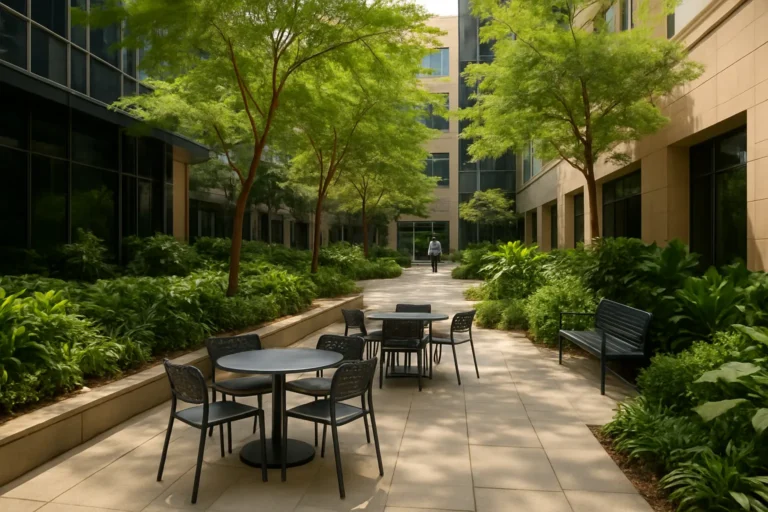
A flexi-desk gives you a registered address inside a free zone without a full lease. DMCC is a clear example. All DMCC companies must have a registered office address within DMCC, which can be fulfilled through a flexi-desk, serviced office or dedicated workspace dmcc.ae. Look for the same model elsewhere: the address requirement stays, but your physical footprint shrinks. Serviced offices sit one step up, with a private room and shared facilities for a slightly larger team that still wants flexibility.
Virtual offices
A virtual office typically provides a business address, mail handling and meeting rooms on demand. It is the leanest way to put an address on record. The key caveat: acceptance depends on the licensing authority and the licence activity. Instead of trusting a provider’s sales page, ask the authority directly. Is a virtual address accepted for your specific activity? What documentary evidence does it require? Will that address satisfy your bank’s account-opening checks? Keep the answers in writing.
Freelance permits and e-commerce licences
These are the home-friendly routes. A freelance permit suits solo service providers — consultants, designers, writers, developers — who work alone and need no premises or team. An e-commerce licence suits online sellers who hold stock elsewhere or drop-ship. Both usually carry activity limits and may restrict visas. Ask the relevant free zone or licensing authority three things: which activities the permit covers, whether a home or alternative address is accepted as the registered address, and what that means for visas and banking. Fees vary by authority and package, so request a current written quote rather than comparing headlines.
[Image placeholder: a founder working from a flexi-desk in a Dubai free zone]
Where Do Regulators Still Require an Address, and What Can Be Done Remotely?
The address is the fixed point; almost everything around it can move online. DMCC states that the entire setup process — pre-approval application, document upload, payment and document signing — can be completed online, with the trade licence issued electronically within 2-3 working days dmcc.ae. You can shortlist, apply and hold a licence without travelling.
The residence visa is the main exception. DMCC states that if you apply for a UAE residence visa through your company, you must visit the UAE to complete required steps such as the medical fitness test and Emirates ID biometric registration. After that, many business activities can be managed remotely depending on the nature of the company. Plan one trip for those steps rather than assuming the whole process is remote. Visa rules change, so confirm current requirements, costs and timing with the immigration authority.
A practical checklist before you pay; confirm the specific requirements and steps with the free zone authority:
- Accepted address type for your chosen licence and activity.
- Tenancy evidence — whether a tenancy contract, Ejari registration (the official lease registration system) or an equivalent document is required.
- Bank requirements — what address evidence your bank asks for at account opening.
- Activity restrictions — whether your specific activity is permitted under that licence and address type.
- Visa eligibility — how many visas the licence supports and what the process involves.
How Do the Options Compare on Cost and Limits?
| Route | Address provided | Typically suits | Visa implications | Main limits |
|---|---|---|---|---|
| Flexi-desk (free zone) | Registered address within the free zone, plus workspace use | Startups and small teams wanting a real base | Confirm visa allocation with the free zone authority | Activity scope and desk hours vary by package; confirm current quote |
| Serviced office | Private office within a serviced facility | Small teams needing a client-facing space | Confirm visa allocation with the free zone authority | Higher cost than a flexi-desk; confirm current quote |
| Virtual office | Business address, mail handling, meeting-room access | Solo founders and online businesses | Confirm whether the authority accepts it for visa purposes | Acceptance depends on authority and activity; confirm current quote |
| Freelance permit | Home or alternative address, per the issuing authority | Solo service providers | Confirm visa eligibility with the issuing authority | Activity limits; team sponsorship normally out of scope; confirm current quote |
| E-commerce licence | Address per the issuing authority | Online sellers | Confirm visa eligibility with the issuing authority | Activity limits; confirm current quote |
One sourced cost anchor: DMCC states that initial setup costs typically range from AED 10,345 to AED 84,515, depending on licence duration and whether office space is included, with flexi-desk options for startups. That range is DMCC-specific, and other free zones publish their own packages. Check the current DMCC packages page directly, because published figures change.
Where founders commonly go wrong:
- Buying a licence before checking the address. It must satisfy your bank and your visa plans, not just the licensing authority.
- Choosing an activity the address type does not support. Confirm with the free zone authority whether your activity is permitted with your intended office option.
- Ignoring renewal and visa costs. Setup is the entry price; renewals and visa processing repeat.
- Trusting a cheap provider’s claims. Verify acceptance with the authority itself.
[Image placeholder: comparison of business setup options with and without office space in Dubai]
Which Route Should You Choose? A Simple Decision Framework
Work through six questions. Do you need a residence visa? Is your work client-facing or online? Are you solo or a team? Do you plan to hire? What does your bank need? And does full foreign ownership matter? On the last point, DMCC states it allows full foreign ownership without the need for a local partner — common across many free zones, but worth confirming for your chosen jurisdiction.
A simple starting matrix:
- Solo consultant or creator → freelance permit, or a virtual office if the authority accepts it for your activity.
- Online seller → e-commerce licence, with the address confirmed against the issuing authority’s rules.
- Small team needing visas → flexi-desk or serviced office in a free zone; confirm visa allocation before committing.
- Home-based founder wanting minimal commitment → the leanest address option your authority accepts, scaled up when you hire.
The sequence that works:
- Shortlist your business activity.
- Check the authority’s address rules for that activity.
- Compare packages on total first-year cost, not headline price.
- Prepare documents — typically passport copies, photographs and the application form.
- Apply online; a DMCC licence, for instance, is issued electronically within 2-3 working days.
- Plan your UAE visit for medical and biometric steps if you are taking a residence visa.
- Open your bank account once the licence and address are in place.
Administrative steps such as document typing and attestation can be handled locally — see Typing Services Near Me: What a UAE Typing Centre Does.
Every founder’s situation differs on visa plans, activity and budget, and the wrong address choice is expensive to undo. Get a tailored check on virtual office and licence options from Al Ain Business Center before you apply — book a free consultation and start your journey with the address route that fits your goals.
Frequently Asked Questions About How to Start a Business in Dubai Without Office Space
Can I get a Dubai trade licence without renting an office?
The exact details depend on your situation and can change, so confirm them with the responsible official authority before you act. Flexi-desks, serviced offices, virtual offices, freelance permits and e-commerce licences are the main lower-cost routes, and address requirements differ by licensing authority, jurisdiction and activity. Confirm with the issuing authority before you pay.
Is a virtual office accepted for company registration in Dubai?
Acceptance depends on the licensing authority and the licence activity, so it is not automatic. Confirm with the free zone authority which office or address options are accepted for your specific activity and what documents it requires, and check account-opening requirements with your bank. Keep those answers in writing before committing.
Can I start a business in Dubai from home?
Freelance permits and e-commerce licences are the home-friendly routes — a freelance permit suits solo service providers, while an e-commerce licence suits online sellers. These routes usually carry activity limits and may restrict visas, so confirm with the relevant free zone or licensing authority whether a home address is accepted for your activity. For DMCC specifically, companies must hold a registered office address within DMCC, which can be met through a flexi-desk, serviced office or dedicated workspace.
Can I set up a Dubai company without living in the UAE?
DMCC states the entire setup process can be completed online — pre-approval application, document upload, payment and document signing — with the trade licence issued electronically within 2-3 working days. Many companies then manage operations remotely once established. Visa steps are the exception, and rules vary by authority.
What is a flexi-desk and how does it differ from a virtual office?
A flexi-desk gives you a registered address inside a free zone plus real workspace you can use part-time, whereas a virtual office typically provides a business address, mail handling and meeting rooms on demand without a desk of your own. In DMCC, a flexi-desk, serviced office or dedicated workspace can fulfil the registered office requirement. Acceptance of a virtual office depends on the authority and activity.
Do I need to visit Dubai to get a residence visa through my company?
Yes — if you apply for a UAE residence visa through your DMCC company, you must visit the UAE to complete required steps such as the medical fitness test and Emirates ID biometric registration. After those requirements are completed, many business activities can be managed remotely depending on the nature of the company. Visa rules change, so confirm current requirements with the immigration authority.
Sources
Published 31 October 2026
Related articles
 Business Setup
 Business Setup
 Business Setup
 Business Setup
 Business Setup
 Business Setup
Latest guides
- Finger Print for Visa Abu Dhabi: Your Biometrics Guide
- Blue Visa UAE 2026: Who Qualifies and How to Apply
- Dubai Airport Free Zone: Is It the Right Fit for You?
- Dubai Freezone Company Setup for Foreigners: Full Guide
- Investor Visa Abu Dhabi Requirements: What You Need
- Investor Visa Requirements in Al Ain: A Local Guide