
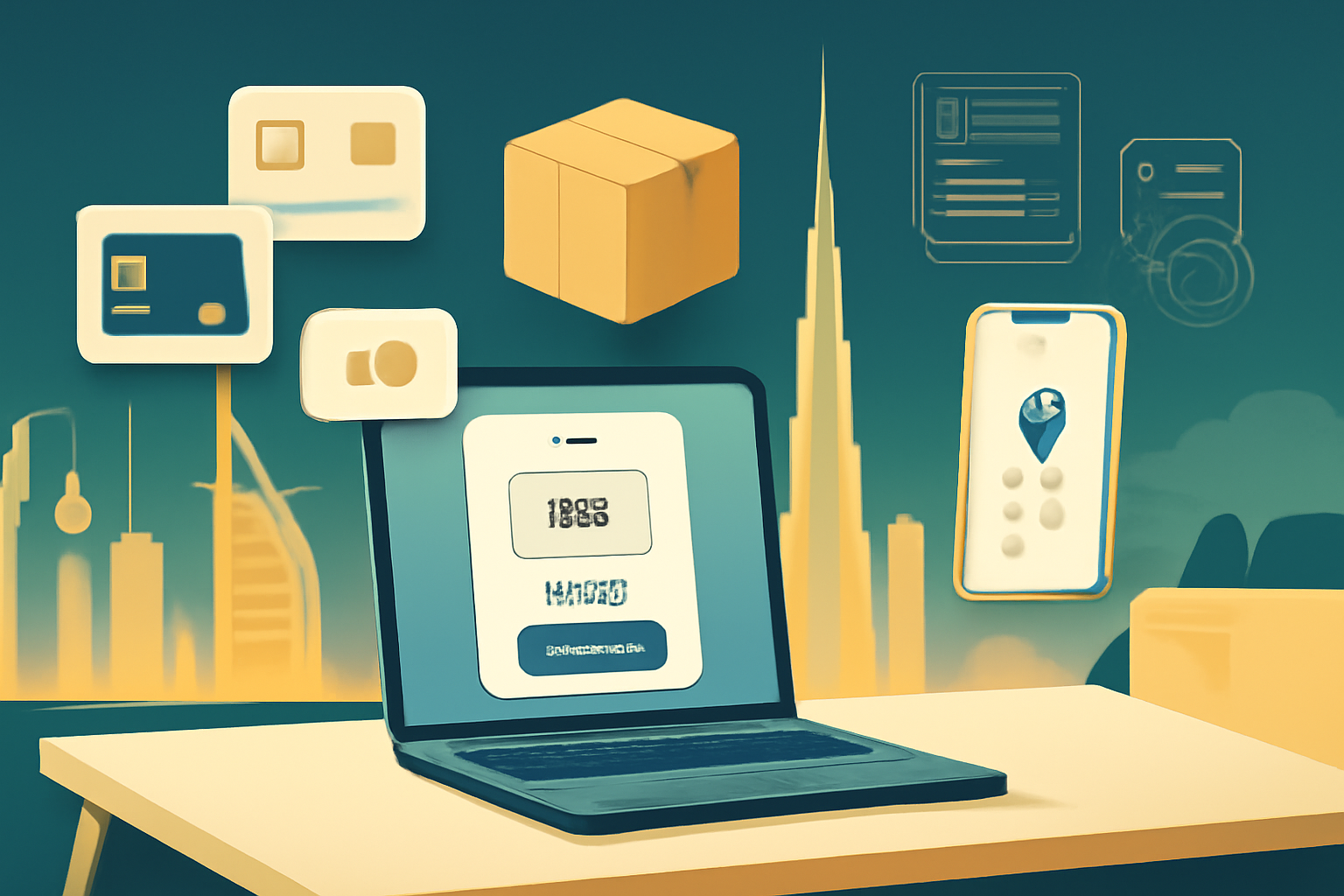
Selling through a website, a marketplace or a social channel while holding the right UAE licence is entirely doable — and it does not require a shopfront, a local partner or a physical office. A business with online operations in the UAE simply means your revenue arrives through digital channels, and you have matched that activity to a trade licence, a payment setup and a visa path that actually fit it. Most founders get stuck on that third part, not on building the website.
Key Takeaways
- “Business with online” is a sales channel, not a licence category. The activity code on your trade licence is what decides what you may legally sell.
- You have three realistic routes: a mainland (DED) e-commerce licence, a free zone e-commerce, media or techno licence, or a freelance permit.
- Mainland gives the widest access to UAE customers and government contracts. Free zones offer 100% foreign ownership and faster setup, but restrict direct trading in the mainland market.
- Online models typically carry lower startup costs and more location flexibility than physical retail, with the ability to reach a global audience.
- The Gulf is mobile-first: smartphone penetration sits above 96% in the UAE and around 92% in Saudi Arabia, two of the key drivers GoDaddy identifies for online business growth in the region.
- Corporate bank account opening — not the licence — is usually the longest step. Prepare your documents before you apply.
- VAT and corporate tax registration depend on whether your turnover reaches the applicable thresholds, and your licence choice decides whether you can sponsor your own residence visa.
What Does “Business With Online” Actually Mean in the UAE?
When founders ask us about a business with online operations, they usually mean one of four models:
Selling physical products. You hold your own stock, dropship from a supplier, or sell as a third-party marketplace seller on platforms such as or Noon.
Selling services remotely. Freelancing, consulting, marketing, design, development or running an agency — delivered to clients online rather than from an office they visit.
Selling digital products. Courses, templates, e-books, software or memberships. High margin, no physical logistics, and genuinely scalable.
Content and advertising income. Monetising an audience through ad revenue, sponsorships or affiliate arrangements.
Here is the part most generic guides skip. There is no separate “online business licence” in the UAE. Online is a channel. What governs your activity is the activity code printed on your trade licence — an e-commerce code covers selling goods, a media or advertising code covers content work, a consultancy code covers advisory services. Get that code wrong and you will not be stopped by the licensing authority first. You will be stopped by your bank, your payment gateway or a visa application later.
| Your model | Typical UAE route | Physical requirements |
|---|---|---|
| Own-inventory e-commerce | Mainland e-commerce licence or free zone e-commerce licence | Storage or a fulfilment partner; customs registration for imports |
| Dropshipping | Free zone e-commerce licence (most common) | Usually none — your supplier ships directly |
| Marketplace seller | Mainland licence for UAE-wide selling, or free zone | Storage or a fulfilment partner |
| Freelance services | Freelance permit, or free zone media/consultancy licence | None; can run fully remotely |
| Digital products and courses | Free zone licence or freelance permit | None |
| Content and affiliate income | Media permit or free zone media licence | None |
If you are still outside the country and want to establish the company before you relocate, that route is well established. This guide on هل يمكنني فتح شركة في دبي من الخارج؟ نعم، إليك الطريقة covers the remote setup process step by step.
Why the UAE and Middle East Are a Strong Base for Online Business
The Gulf’s move online is not a forecast. It is already the default. GoDaddy’s regional market notes cite high smartphone usage as a key driver of online business growth — the UAE above 96% and Saudi Arabia around 92%. Practically, that means your storefront, checkout and customer service should be designed mobile-first from day one, not retrofitted a year later when conversions disappoint.
Online businesses generally carry lower startup costs, offer location flexibility and can reach a global audience compared with traditional brick-and-mortar operations, as Stripe’s guide to starting an online business notes.
On top of that, the UAE brings structural advantages that are harder to replicate elsewhere:
- Time zone position. Sitting between Asia and Europe, you can serve both regions inside a normal working day.
- Logistics infrastructure. Courier networks, fulfilment centres and last-mile delivery are mature and competitive.
- Digital payment adoption. Card and digital wallet usage is high, which shortens the checkout process for most customers.
- A large expatriate consumer base. Multiple nationalities and languages, with steady demand for imported goods and niche services.
Those factors make the UAE a strong base for a business with online operations serving the GCC, Europe or Asia. One caveat is worth stating plainly: high digital adoption does not remove the need for correct licensing, banking and tax registration. Those obligations apply whether you serve ten customers or ten thousand.
Which Online Business Model Fits Your Capital, Skills and Timeline?
Use the table below as a decision framework before you choose a licence. Score yourself honestly on each row — the model with the least friction for your situation is usually the right place to start.
| Model | Upfront capital | Inventory risk | Licence needed | Time to first sale | Scalability |
|---|---|---|---|---|---|
| Dropshipping | Low | None — supplier holds stock | Yes; e-commerce activity | Days to weeks | Medium; margins are thin |
| Own-inventory e-commerce | Medium to high | High | Yes; e-commerce activity | Weeks to months | High; strong brand equity potential |
| Services and consulting | Very low | None | Freelance permit or company licence | Days | Limited by your own time |
| Digital products and courses | Low | None | Free zone licence or freelance permit | Weeks to months | High; high margin |
| Marketplace selling | Low to medium | Medium | Yes; trading activity | Days | Medium; platform rules constrain branding |
A few notes on each path:
Dropshipping. Customers order from your store and you pass the order to the supplier to ship, so there is no inventory and fewer logistics to manage, as Xero describes it. The trade-off is thinner margins and less control over the delivery experience — which matters in a market where buyers expect fast, tracked shipping.
Own-inventory e-commerce. Higher capital, real storage and customs obligations, but you control margin, packaging and brand. If you intend to still be selling this in five years, it is usually the stronger foundation.
Services and consulting. Lowest startup cost and the fastest route to revenue. The ceiling is your own calendar, so decide early how you will productise or delegate before you hit it.
Digital products and content. High margin and genuinely scalable, but typically the longest runway before meaningful revenue. Treat it as a build, not a quick win.
Marketplace selling. The fastest route to existing traffic on or Noon, but platform fees and rules constrain how you brand and price. Many sellers use a marketplace to learn demand, then move customers to their own store.
Do You Need a UAE Trade Licence to Sell Online?
Yes — for commercial selling, marketplace trading and any repeatable business activity. Anyone running a business with online sales, repeat orders, invoicing or marketplace listings needs a commercial licence of some kind. The real question is which one, and from where.
Mainland (DED) e-commerce licence. Lets you sell across the UAE and bid for government and enterprise contracts. It is often paired with a virtual office or an Ejari-registered address. If your customers are UAE-based consumers or companies, this is the broadest route. The mainland instant licence process can move quickly when your activity and trade name are straightforward — see How to Get an Instant License in Dubai Mainland: Step-by-Step.
Free zone licence. 100% foreign ownership, faster setup and a lower entry cost. The trade-off is a restriction on trading directly in the mainland market without an agent, branch or distributor arrangement. For dropshippers and businesses selling across borders, this is often the better fit.
Sole establishment or civil company. An option for individual professionals and certain service activities, depending on the emirate and the specific activity.
Freelance permit or media permit. Built for solo creators, marketers and consultants who want to operate legitimately without forming a full company. If that is your path, understand the total freelancer visa dubai cost before you commit, because permit fees and visa costs are separate line items.
Activity codes deserve real attention here. A mismatched code is one of the most common reasons a bank or payment provider declines an application. If your licence says “general trading” but your website sells online courses, expect questions — and expect the amendment process to cost you time you had not budgeted.
Step-by-Step: How to Set Up an Online Business in the UAE
1. Validate demand and choose your target market. UAE-only, GCC-wide or global? This single decision shapes your jurisdiction, payment and logistics choices.
2. Choose your jurisdiction and legal structure. Mainland or free zone. Then reserve your trade name and secure initial approval.
3. Select activity codes and apply for the licence. Add a virtual office or flexi-desk address if the licence requires one.
4. Open a corporate bank account and set up payment collection. Stripe’s guidance is direct: include multiple payment options so it is as easy as possible for customers to buy. Regionally, that means cards, digital wallets, bank transfer — and often cash on delivery.
5. Build the storefront. Mobile-first layout, prices in AED, Arabic and English options, and delivery and returns terms visible before checkout, not buried in a footer.
6. Connect logistics, customs and fulfilment. If you sell locally, build cash-on-delivery handling and reconciliation into the process from the start rather than patching it in later.
7. Register for VAT and corporate tax where the thresholds apply. Set up accounting from month one. Year-end reconstruction is expensive and error-prone.
8. Apply for residence visas for yourself and your dependants, if your licence and shareholding allow it.
If you want the general Dubai sequence in more depth, كيفية بدء عمل تجاري في دبي خطوة بخطوة walks through it end to end.
What Does It Cost, and How Long Does UAE Online Business Setup Take?
Rather than quoting one figure — which would mislead you — it helps to understand what actually drives the number.
One-time setup costs: trade licence fee, trade name reservation, establishment card (the immigration file that allows your company to sponsor visas), visa quota allocation, and initial approval and typing fees.
Recurring annual costs: licence renewal, virtual office or flexi-desk, accounting and bookkeeping, banking fees and minimum balance requirements, and platform subscriptions for your storefront, email and analytics.
The main cost drivers are your jurisdiction, the number of activity codes you need, how many visas you require, your office solution and the number of shareholders. Two businesses that sound identical can differ noticeably in price for exactly those reasons.
Timeline. A straightforward free zone package can complete within a few working days. Mainland routes involving external approvals or additional consents typically take several weeks. But the licence is rarely the bottleneck — bank account opening usually is. Plan for that step to run longest, and prepare your documentation before you submit anything. For a fee breakdown by licence type, see E Commerce License Dubai Cost in 2026: Fees & Guide.
Soft costs founders forget in year one: payment gateway transaction fees, shipping and returns, marketing spend, and foreign exchange if you buy stock or pay suppliers in another currency.
Government fees and free zone packages change. Confirm the current tariff directly with the authority or with a licensed advisor before you budget — and treat any guide that quotes fixed prices without a date with caution.
Payments and Banking: Getting Paid as an Online Business in the UAE
Three terms get used interchangeably, but they are not the same thing:
| Option | What it actually does | Best suited to |
|---|---|---|
| Merchant account | Holds the funds from card transactions; provided by a bank or acquirer | Established businesses with predictable volume |
| Payment gateway | Securely transmits payment data from your checkout to the acquirer | Any business taking card payments online |
| Payment aggregator | Bundles gateway and account services under one agreement | New businesses that need to accept cards quickly |
For most new online businesses, an aggregator is the fastest way to start accepting cards while a full merchant account application is in progress.
Payment methods to support: cards, digital wallets, bank transfer, buy-now-pay-later, and cash on delivery. COD still accounts for a meaningful share of regional e-commerce, and it carries two specific risks — returns and reconciliation. Every COD order needs a clear process for confirming delivery, recording cash collected and matching it against your accounts.
Multi-currency pricing. Decide early whether you bill in AED, USD or both. Dual pricing can improve conversion for international customers, but it complicates your bookkeeping and exposes you to exchange-rate movement.
Common banking friction points: corporate account rejections, minimum balance requirements, and a mismatch between your licensed activity and what your website actually sells. A clear business description, backed by a licence that matches your revenue, keeps onboarding moving.
A documentation pack that speeds things up: trade licence, establishment card, shareholder passports and visas, proof of address, a one-page business profile, and examples of your website or product listings.
Tax, Legal and Consumer Compliance You Cannot Skip
VAT registration. VAT applies in the UAE, and registration becomes mandatory once your taxable supplies cross the set threshold. Voluntary registration earlier can make sense if you want to reclaim input VAT on expenses, but it adds filing obligations — weigh it rather than assuming it is free money.
UAE corporate tax. Corporate tax applies to business profits above the relevant threshold. This is exactly why bookkeeping from month one matters.
Consumer protection. Clear pricing, stated delivery times, published refund and returns policies, and accurate product descriptions. These are not optional niceties; they are what keeps disputes and chargebacks out of your business.
Data protection. If you collect customer data, you need a lawful basis for holding it, a privacy notice customers can actually find, and a sensible retention policy.
Advertising claims. Influencer and social selling fall under advertising rules. Disclose paid partnerships and avoid claims you cannot substantiate.
Intellectual property. Register your trademark, and steer clear of counterfeit or restricted product categories — they create legal exposure that no amount of marketing spend can fix.
Thresholds, rates and rules change. Verify current requirements with a licensed advisor or the relevant authority before relying on any summary, including this one.
Can an Online Business Get You a UAE Residence Visa?
Often, yes — but eligibility depends on your licence type, activity, shareholding and jurisdiction.
An e-commerce or free zone licence can support investor or partner visa eligibility. Three structural details decide how smoothly it goes:
- Establishment card. Your company’s immigration file. Without it, the company cannot sponsor anyone.
- Visa quota. The number of visas your licence permits. Free zones and mainland licences allocate differently, and quota is often tied to your office solution.
- Owner visa versus employee visa. As an owner or partner you are sponsored through your own company; employees are sponsored separately against the company’s quota.
Dependants. Once you hold a valid residence visa, you can typically sponsor a spouse and children, and in some cases parents, subject to income and documentation requirements.
Golden Visa pathways. Longer-term residence options exist for entrepreneurs and specialised talent. They differ from a standard licence-backed visa in both duration and eligibility criteria, so compare them properly rather than assuming one leads to the other.
Freelance and remote-work permits. If you are a solo operator not ready for a full company, these can provide a legitimate residence route. Before choosing, weigh the freelancer visa dubai cost against a free zone package — for some founders the company route works out better once banking and scale are factored in.
One rule of thumb: confirm visa eligibility before you pay for a licence, not after. Choosing the right jurisdiction up front is far cheaper than switching.
Seven Mistakes That Stall a Business With Online Operations in the UAE
1. Choosing an activity code that does not match the business. You then fail bank or gateway compliance and have to amend the licence later, usually at the worst possible moment.
2. Skipping licensing and selling only through social media. It caps your growth, blocks reputable payment providers and creates genuine regulatory exposure.
3. Mixing personal and business finances. Nothing complicates a business with online income faster. It muddies tax, banking and visa renewals, and makes your accounts hard to defend.
4. Underestimating fulfilment. Delivery times, returns, COD reconciliation and customs on imported stock all cost more than the spreadsheet suggested.
5. Ignoring mobile experience and Arabic-language buyers. In a mobile-first market, a slow or English-only checkout quietly loses sales you never see in the analytics.
6. Assuming a free zone licence means unlimited mainland trading. It does not, without the right agent, branch or distributor arrangement.
7. Budgeting only for setup. Renewals, accounting and second-year costs are the ones that surprise people. Plan for year two before you launch in year one.
Your Recommendation Framework: Which Route Should You Take?
Match your situation to the route:
- Solo freelancer or consultant, no inventory: start with a freelance permit or a low-cost free zone licence. Upgrade to a company when you need to hire or invoice larger clients.
- Product seller targeting UAE consumers only: a mainland e-commerce licence with a virtual office gives you the widest market access.
- Dropshipper or global seller: a free zone e-commerce licence, paired with
Frequently Asked Questions About Business With Online
Do I need a trade licence to sell online in Dubai?
Yes. For commercial selling, marketplace trading and any repeatable business activity in the UAE, you need a commercial licence of some kind. There is no separate “online business licence” — online is a sales channel, and the activity code on your licence determines what you may legally sell. Getting that code wrong typically causes problems later with banks, payment gateways or visa applications.
How much does it cost to start an online business in the UAE?
There is no single figure, because cost depends on your jurisdiction, licence type, activity codes, address requirement and visa plans. Online models generally carry lower startup costs than physical retail, and free zones tend to offer a lower entry cost than mainland. One-time setup costs include the trade licence fee, trade name reservation and any virtual office or flexi-desk address.
Can I run an online business from home in the UAE?
In many cases yes. A UAE business with online operations does not require a shopfront, a local partner or a physical office, and models such as dropshipping, digital products, content work and freelance services typically need no premises. Where a licence does require an address, a virtual office or flexi-desk is commonly used instead of commercial space.
Can an online business sponsor a UAE residence visa?
It depends on your licence choice and your shareholding. Your licence type decides whether you can sponsor your own residence visa, and dependant visas are also subject to that licence and shareholding position. You apply for residence visas after the licence and any required bank account are in place.
Do I need to register for VAT if I sell online in the UAE?
VAT and corporate tax registration depend on whether your turnover reaches the applicable thresholds. If you sell online in the UAE, set up your accounting from the first month so that registration and filing are handled correctly rather than reconstructed at year end. Check the current thresholds with the relevant authority for your situation.
Sources
Still have a question?
Every situation has its own details. Tell us what you are planning and we will come back to you with the specifics for your case.
Related articles
 Business Setup
 Business Setup
 Business Setup
 Business Setup
 Business Setup
 Business Setup
Latest guides
- 2-Year Residence Visa Renewal UAE Cost: 2026 Fee Breakdown
- Housemaid Visa Abu Dhabi: Cost, Steps and Requirements
- Green Visa UAE: Requirements, Costs and How to Apply
- UAE Visit Visa Categories for Technology & AI Talent
- Business Visa in UAE 2026: Types, Costs and How to Apply
- Visa-Free Countries for UAE Residents With Pakistani Passports