So, what exactly is a freelance visa in Dubai? Think of it less like a traditional visa and more like a special key that unlocks your ability to work for yourself. It’s a residence permit and a work licence rolled into one, giving you the legal freedom to live in the UAE and operate as an independent professional. This is a world away from a standard employment visa, which ties you to just one company.
Your Gateway to Working Independently in Dubai
Imagine having the freedom to work with any company you choose across Dubai's booming economy, without being locked into a single sponsorship. That’s the real power of the Dubai freelance visa. This guide will walk you through everything, step by step, so you can confidently join the city’s growing community of independent professionals.
As the world shifts towards more flexible ways of working, Dubai has firmly established itself as a top destination for talent. We'll show you exactly how to navigate the process and turn your career goals into a reality here in the Emirates.
The Rise of Freelancing in the UAE
Freelancing is no longer a side gig; it's a major economic driver. The UAE government has been quick to recognise this, creating a regulated and supportive framework that makes it easy for independent professionals to thrive. It's a smart move that benefits both the freelancer and the wider economy.
The freelance visa is your legal foundation. It gives you the legitimacy you need to operate with confidence, bundling together your residence visa and an establishment card. That card is crucial—it's what lets you open a corporate bank account and manage your business finances like a professional.
This setup offers some serious perks over traditional employment, especially if you’re in a creative, tech, or consulting field. The main advantages are clear:
- Complete Autonomy: You're the boss. You pick the projects and the clients you want to work with.
- Legal Protection: With a government-issued permit, you’re operating completely above board. No grey areas.
- Financial Independence: You can open a proper corporate bank account to keep your business earnings separate and professional.
- Sponsorship Ability: It’s not just about you. You can also sponsor your family, making it a solid long-term solution for relocating.
The UAE's freelance scene has exploded, growing at an annual rate of 10% as of 2025. This growth is a clear signal of the region's commitment to attracting the world's best independent talent. It’s part of a massive regional shift, with freelancer registrations surging across the Middle East. You can dive deeper into these freelancing trends and insights from JobxDubai. This trend shows that Dubai is cementing its position as a global hub for flexible work, and with an expert partner like Al Ain Business Center, getting set up is straightforward and secure.
Choosing Your Ideal Dubai Free Zone
Picking the right free zone for your freelance visa is one of the biggest calls you'll make. Think of it like choosing the perfect neighbourhood for your business to not just exist, but actually grow. Each free zone is its own specialised economic hub, complete with its own rulebook, industry focus, and professional community.
This decision is the very foundation of your freelance career in the UAE. Getting it right means matching your skills and services with an authority that not only allows your line of work but also provides an ecosystem where you can genuinely thrive.
What Makes Each Free Zone Unique
Dubai’s free zones aren't a one-size-fits-all deal. They are carefully crafted environments designed to pull in talent from specific industries. A graphic designer, for example, will feel right at home in Dubai Design District, while a software developer will find their tribe in Dubai Internet City.
This specialisation creates powerful industry clusters. It puts you in the same room—sometimes literally—with potential clients, collaborators, and peers who speak your professional language. This kind of environment naturally sparks networking opportunities and business growth you just wouldn't get in a more generic setup.
Choosing a free zone isn't just admin; it's a strategic business move. You're not just getting a visa. You're positioning yourself for success in a competitive market by joining a community that gets what you do.
The key is to perfectly match your professional activities to a free zone's approved list. Trying to get a permit for "Web Development" in a zone that’s laser-focused on media production will just end in a swift rejection. This is why digging in and doing your homework is absolutely non-negotiable.
Comparing Top Free Zones for Your Freelance Visa
To help make this vital decision a bit easier, let's break down some of the most popular free zones offering freelance permits. Each one has its own distinct advantages geared towards different types of professionals. Understanding these nuances is the first real step towards a successful application.
This table highlights the core focus and ideal candidate for three of Dubai's go-to free zones for freelancers.
Comparing Dubai's Top Free Zones for Freelancers
| Free Zone | Primary Industry Focus | Example Permitted Activities | Best Suited For |
|---|---|---|---|
| Dubai Media City (DMC) | Media and Communications | Journalist, Content Creator, Copywriter, Social Media Specialist, Photographer, PR Consultant | Professionals in content creation, journalism, marketing, and public relations. |
| Dubai Internet City (DIC) | Technology and IT | Software Developer, Web Designer, IT Consultant, Data Scientist, Cybersecurity Specialist | Tech experts, programmers, and digital innovators who need a robust tech infrastructure. |
| Dubai Knowledge Park (DKP) | Education and Training | Corporate Trainer, Education Advisor, Executive Coach, Instructional Designer, Researcher | Educators, academic consultants, and human resources professionals focused on professional development. |
Seeing them side-by-side really clarifies how specialised each environment is. Your skills need to align with their vision.
Beyond the Big Three: Other Notable Options
While DMC, DIC, and DKP are titans in the freelance world, there are other fantastic free zones that cater to more niche professions. For instance:
- Dubai Design District (d3): The ultimate hub for fashion designers, artists, interior designers, and other creative visionaries. It’s an ecosystem purpose-built to nurture creativity.
- Dubai Production City (DPC): Perfectly suited for professionals in publishing, printing, and packaging, this zone supports the entire production lifecycle from concept to completion.
- RAKEZ (Ras Al Khaimah Economic Zone): While it's not technically in Dubai, RAKEZ is an extremely popular and budget-friendly option for freelancers across hundreds of professions, offering a huge amount of flexibility.
The free zone you choose directly shapes the scope of work you can legally take on. It also heavily influences your networking circle and even your business address. Many freelancers value a prestigious business location, which is achievable without the expense of a physical office. For anyone looking for a professional address without the overheads, exploring a virtual office in Dubai is a smart, cost-effective way to maintain a credible business presence.
At the end of the day, the "best" free zone is simply the one that clicks with your career goals, professional activities, and budget. Taking the time to research and select the right one will pay off massively throughout your freelance journey in Dubai. It truly sets the stage for everything that comes next, from opening a bank account to landing that first big client.
Navigating the Visa Application Journey
Getting your hands on a Dubai freelance visa is a step-by-step affair. Think of it less like a single sprint and more like a well-defined race with several checkpoints. At first glance, the process might look a bit bureaucratic, but it’s actually a very logical sequence of events designed to get you set up as a legal, working resident in the UAE.
We’re going to walk you through the whole thing, from the first application form to the moment that visa sticker goes into your passport. Once you know what’s coming at each stage, you can get everything ready, ditch the stress, and move ahead with confidence.
The Initial Application and Permit Issuance
It all kicks off when you formally apply for your freelance permit with the free zone you’ve chosen. This is where all that groundwork of gathering your documents really pays off. You’ll submit everything online—passport copies, attested degree certificates, your professional portfolio, the lot.
Once the free zone authorities give your profile the green light, they’ll issue your freelance permit. This is your official licence to operate as a freelancer under their jurisdiction. Consider it the business half of your setup; it’s what makes your work legitimate.
Right after that, you’ll receive an Establishment Card, which you might also hear called an Immigration Card. This is a crucial little document that connects your freelance permit to the immigration system, paving the way for the actual visa process to start.
From Entry Permit to Visa Stamping
With the permit and Establishment Card sorted, the focus shifts to your residency status. The free zone will apply for your Entry Permit on your behalf (sometimes called an employment visa for entry). This is the paper that lets you legally enter the UAE to finalise your residency. If you're already in the country on another visa, this is what you'll use to change your status.
This flowchart really clarifies how your professional field—be it tech, media, or education—steers you toward a specific free zone, which is the very first decision you make on this path.
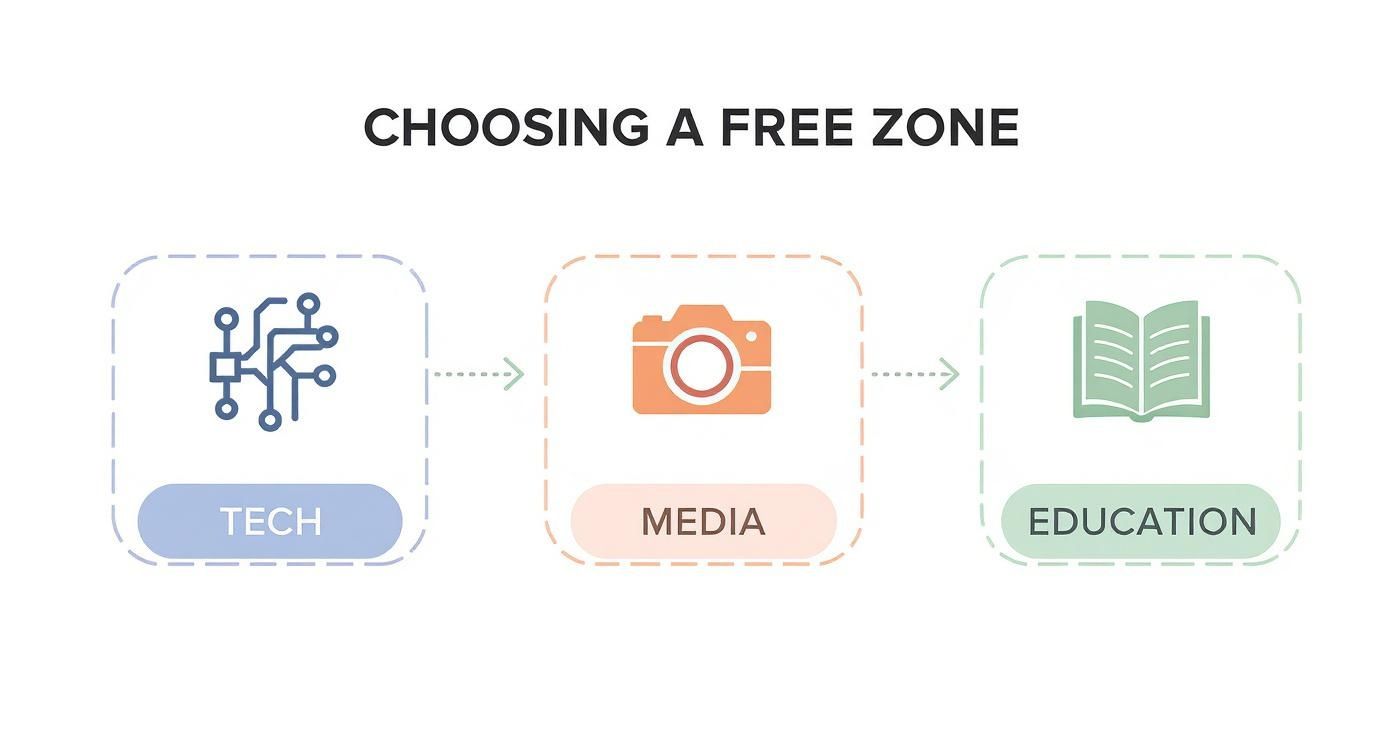
As you can see, aligning your skills with a specialised free zone isn’t just a good idea—it's the strategic starting block for the entire application journey.
After your entry permit is issued and you’ve done your "status change," you’ll move on to the mandatory in-country procedures. It's a three-part process every new resident goes through:
- Medical Fitness Test: A straightforward blood test and a chest X-ray to screen for any communicable diseases. You’ll get this done at one of the government-approved medical centres dotted across Dubai.
- Biometrics Appointment: You’ll visit a designated centre where they’ll take your fingerprints and a digital photo for your Emirates ID.
- Emirates ID Application: The Emirates ID is your official identification card here in the UAE. The application for it is processed right alongside your medical test and biometrics.
The Final Step: Visa Stamping in Your Passport
Once you’ve cleared the medical test and had your biometrics taken, you’re on the home straight. The final piece of the puzzle is the visa stamping. Your passport is sent off to the immigration authorities, who will place the official residence visa sticker inside.
This residence visa is typically valid for two years and is the ultimate proof of your legal status to live and work as a freelancer in Dubai. It’s the moment your entire application journey culminates in success.
With that stamped visa in your passport and your Emirates ID in your wallet, you are officially a UAE resident. You can now sponsor your family, open a personal bank account, and start enjoying all the perks of your new professional life. For a deeper dive into the general residency requirements, have a look at our complete guide on how to get a residence visa in Dubai; many of the core principles apply here too.
Health Insurance: A Mandatory Requirement
This is a big one: you absolutely must have valid health insurance to finalise your residence visa. You simply cannot get your visa stamped without showing proof of a compliant medical insurance plan.
Under the Dubai Health Authority (DHA) rules, every single resident has to be covered. As a freelancer, you're your own boss, so you're responsible for arranging your own policy. It has to meet certain minimums, including:
- An annual coverage limit of at least AED 150,000.
- Coverage for emergency medical treatment.
- Both in-patient and out-patient care.
Forgetting or delaying your health insurance will bring your application to a dead stop. It’s a non-negotiable step, so it’s wise to get your policy sorted as soon as your entry permit is issued to avoid any hold-ups with the final stamping.
Your Essential Document Checklist
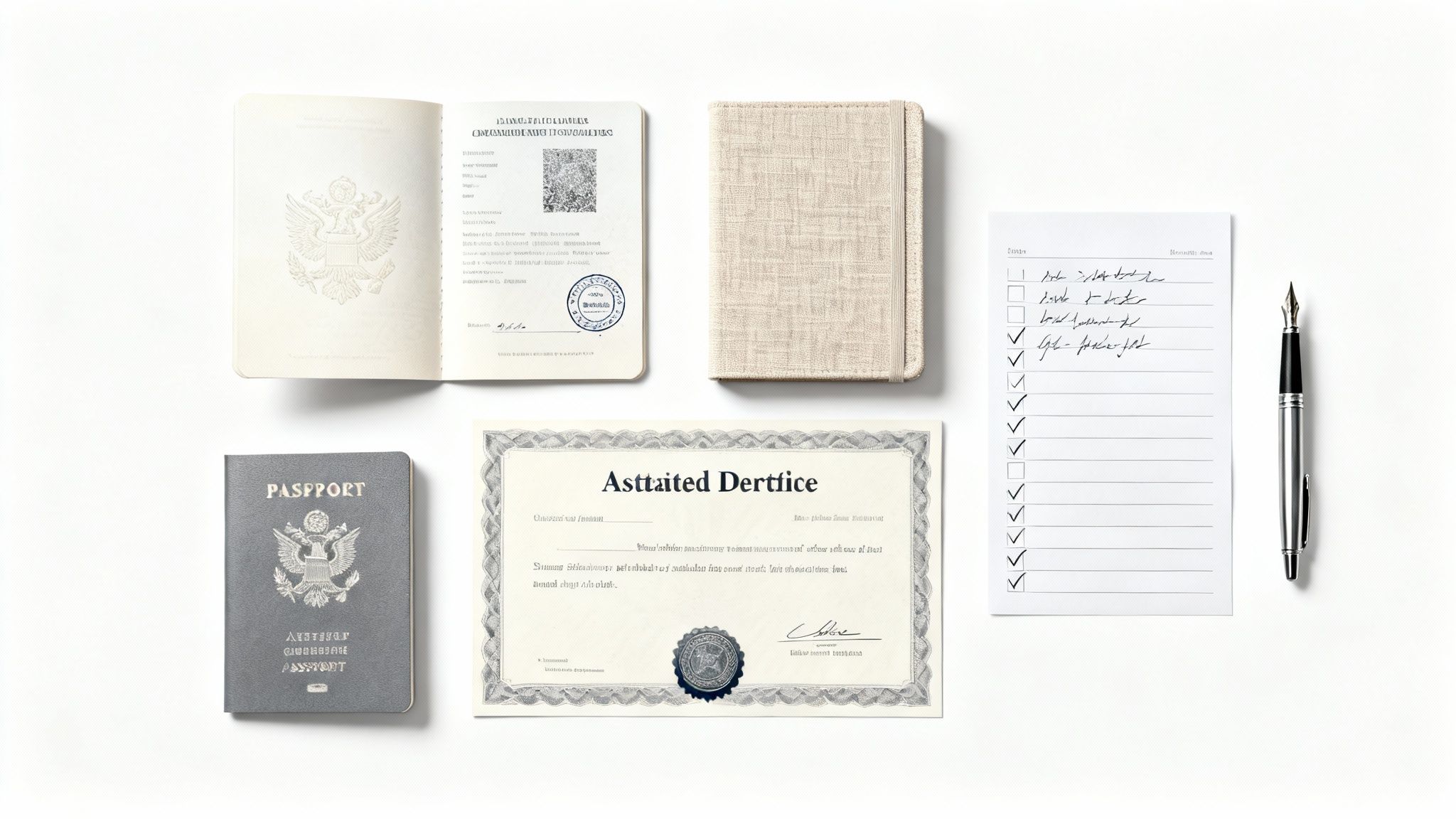
A successful freelance visa application is built on meticulously organised paperwork. Think of this part as the pre-flight check for your Dubai freelance journey; every item must be present and correctly prepared to avoid any turbulence. Missing just one document can cause serious delays, so precision here is non-negotiable.
This checklist is your definitive guide to the paperwork you'll need. We'll go beyond just listing items and explain the 'why' behind some of the more complex requirements, so you can put your application file together with complete confidence.
Core Personal Documents
Let's start with the absolute must-haves. No matter which free zone you choose, these documents are the foundation of your application.
-
Valid Passport Copy: Your passport must have at least six months of validity left at the time you apply. It's also a good idea to make sure you have a few blank pages for the entry permit and the final visa stamp.
-
Passport-Sized Photographs: You’ll need recent, high-quality photos with a plain white background. It's critical to follow the specific dimensions and guidelines set by the UAE immigration authorities.
-
Updated Curriculum Vitae (CV): Your CV needs to clearly map out your professional background. Be sure to highlight the specific skills and experience that match the freelance activity you're applying for, as this helps the free zone authority verify your expertise.
Proving Your Professional Standing
Beyond your personal details, you need to provide solid proof of your professional qualifications and experience. This is how the free zone confirms you're a genuine professional in your field.
Think of this part of your application as building a case for your expertise. The free zone wants to see tangible proof that you have the skills and track record to succeed as a freelancer. A strong portfolio and verified qualifications are your best evidence.
The exact requirements can differ slightly between free zones, but you'll almost certainly need to provide the following:
-
Attested Educational Degrees: For many professional activities, particularly in fields like consulting or education, your university degree must be legally attested. This is a multi-step process that involves verification from your home country's government bodies and the UAE Embassy.
-
Portfolio or Work Samples: This is your chance to shine. A well-curated portfolio showcasing your best work is essential for creatives and media professionals. If you're a consultant or developer, this might look more like case studies or detailed project summaries.
-
Professional Reference Letters: Letters from previous employers or major clients on official letterhead can give your application a real boost. They act as a third-party endorsement of your skills and reliability.
Navigating Special Circumstances
Some applicants might need to provide extra documents based on their current residency or employment status in the UAE. Getting these scenarios right is key to avoiding unexpected roadblocks.
One of the most common points of confusion is the No Objection Certificate (NOC).
An NOC is a formal letter from your current sponsor (your employer) stating they have no issue with you getting a freelance permit. You'll only need this if you are already employed in the UAE under another company's visa and want to start freelancing on the side. However, if you're applying from outside the UAE or are here on a tourist visa, an NOC is not required.
Additionally, some free zones may ask for a bank reference letter or recent bank statements to show you're financially stable. While not always mandatory, it's a good idea to have these ready in advance, as it can help speed up the approval process significantly.
Understanding Visa Costs and Timelines
Let's talk numbers. Embarking on your freelance journey in Dubai requires an upfront investment, both in time and money. Getting a clear picture of these costs helps you budget properly and set realistic expectations for your launch.
Think of it less as a simple fee and more as the seed funding for your independent business in one of the world's most dynamic economic hubs.
The total cost to get your freelance visa sorted typically lands somewhere between AED 15,000 and AED 25,000. This figure bundles together all the essentials to get you fully licenced and legally residing in the UAE. It’s the initial outlay that unlocks long-term value, from a zero-income-tax environment to the ability to sponsor your family.
Breaking Down the Core Costs
So, where exactly does that money go? The total isn't just one single charge; it's a sum of several distinct government and administrative fees. Each one marks a mandatory step on the path to securing your freelance status.
Here’s a typical breakdown of the key expenses you can expect to cover:
- Freelance Permit Fee: This is the main cost for your professional licence, paid directly to the free zone authority you've chosen.
- Establishment Card Fee: This crucial card links your permit to the immigration system, officially kicking off your visa process.
- Entry Permit and Visa Stamping: These are standard immigration fees for processing and stamping the residency visa into your passport.
- Medical Fitness Test: A non-negotiable government fee for the required health screening.
- Emirates ID Application: The cost for issuing your mandatory national identification card, your key to living and working in the UAE.
Keep in mind that these costs can fluctuate slightly based on the free zone and the specific services you opt for. For a deeper dive into the numbers, have a look at our comprehensive guide to Dubai freezone company setup costs—it offers much more detail for budgeting your new venture.
Mapping Out the Application Timeline
Just as important as the cost is knowing how long it will all take. While every application has its own journey, the process for a freelance visa in Dubai generally follows a predictable timeline. You should plan for it to take between three to five weeks from start to finish.
This timeframe really hinges on having all your documents in order from the get-go. Any delays in providing essentials, like an attested degree certificate, can definitely stretch things out.
Key Insight: The investment in your freelance visa pays dividends, and fast. It's your ticket to operating in a zero-income-tax environment and gives you the legal foundation to build a sustainable business and secure your residency in the UAE.
This investment opens the door to serious earning potential. A recent report highlighted that skilled freelancers in the UAE can command impressive daily rates, sometimes hitting $1,000 (Dh3,600). Even professionals with a few years under their belt can earn significantly, with daily rates for specialised roles often starting between $275 and $325 and climbing past $725 for seasoned experts. You can read more about the top roles and earning potential for UAE freelancers from this Khaleej Times report.
Ultimately, the costs and timelines are a strategic investment in your professional freedom and financial future, giving you a clear, regulated path to success in Dubai.
Your Top Freelance Visa Questions, Answered
As you get closer to making the move, it's natural for specific, practical questions to pop up. What does day-to-day life and work really look like with a freelance visa in Dubai? This is where the fine print matters.
We get these questions all the time from aspiring freelancers just like you. Think of this section as your quick-fire FAQ to clear up those last few uncertainties, so you can move forward feeling completely confident in your decision.
Can I Sponsor My Family on a Freelance Visa in Dubai?
Yes, you absolutely can. This is easily one of the biggest perks of going the freelance visa route. It gives you the power to sponsor your dependents—meaning your spouse and children—providing a solid foundation for your family to build a life here in the UAE.
The process itself isn't all that different from what employees on a standard work visa go through. You'll need to show you meet a minimum monthly income, which is straightforward to prove with your corporate bank statements. You'll also need the usual attested documents, like your marriage and birth certificates, to confirm your relationships.
Do I Need an Office Space with a Freelance Permit?
No, and that's a huge win for your wallet. A physical office is not a mandatory requirement for a freelance permit. The entire system was designed with independent professionals in mind, giving you the full legal right to work from home or any of the fantastic co-working spaces dotted around the city.
While you don't need a dedicated office, many free zone packages for the freelance visa Dubai come with access to shared business facilities. This often means you can use professional meeting rooms, jump into networking lounges, or grab a hot desk—giving you that perfect blend of flexibility and corporate resources without the hefty price tag.
It’s the best of both worlds, really. You keep your overheads incredibly low but still have access to a professional setting whenever you need it.
How Do I Renew My Freelance Visa and Permit?
Renewing your freelance setup is generally a much smoother ride than the initial application. It’s a two-part process: first, you renew your freelance permit directly with the free zone that issued it, and second, you renew your residence visa with the immigration authorities.
You will need to go for another medical fitness test as part of the visa renewal. It's always a good idea to kick off the whole renewal process at least 30 days before your current visa and permit are set to expire. This gives you plenty of breathing room and helps you avoid any last-minute fines or work disruptions.
Managing renewals and staying on top of compliance doesn’t have to be a headache. The expert team at Al Ain Business Center can take care of the entire process for you, ensuring everything is handled smoothly so you can stay focused on your clients and your work. Find out more about our complete PRO and visa services by visiting us at https://alainbcenter.com.
Article created using Outrank