Setting up in Jebel Ali Freezone Dubai UAE gives you a trade licence, port-adjacent warehousing and a visa quota that scales with the space you lease — usually without a local sponsor. The catch is that Jafza is facility-led: your lease shapes your costs, your headcount and how easily you can grow.
Key Takeaways
- Jafza is a facility-led free zone. Your licence tier, visa quota and much of your annual cost are tied to the physical space you lease.
- The zone earns its premium when port, airport and logistics movement sit at the centre of your margins: freight forwarding, general trading, import/export, light manufacturing, e-commerce fulfilment and regional distribution.
- Full foreign ownership is standard. Whether that also means 0% corporate tax depends on whether your entity qualifies for the free zone regime — it is not automatic, and it needs professional review.
- Legal structures are not interchangeable. An FZE suits one shareholder, an FZCO suits two or more, a branch extends an existing parent company, and a freelance permit serves individuals.
- Facility rent, not the licence fee, usually dominates your total cost. Compare rent per sqm, service charges, deposits and fit-out before you commit capital.
- Free zone status does not automatically grant mainland trading rights. If UAE domestic contracts matter, plan a distributor, a mainland branch or a mainland entity.
- Under-leasing space is the most common cause of visa bottlenecks for growing teams.
Why Jebel Ali Freezone Dubai UAE Matters for Traders and Logistics Founders
Jafza describes itself as Dubai’s largest free zone, sustaining 130,000 jobs (jafza.ae), and reports it is a base for more than 11,000 businesses from over 100 countries (jafza.ae). Scale like that matters beyond marketing. When your freight partners, suppliers and prospective customers are already on-site or a short drive away, quoting, sampling and shipping all move faster.
The deeper draw is geography. Jafza’s proposition is built around its position in the Jebel Ali logistics corridor, alongside Jebel Ali Port, with Al Maktoum International Airport serving the wider area. For a trading or logistics operation, that adjacency is designed to deliver three practical gains:
- Quicker container turnaround. Cargo clears and reaches your unit without a long inland journey across the emirate.
- Lower inland haulage per shipment. Small savings on every container compound quickly once you are moving volume.
- Simpler customs coordination for re-export. Goods can arrive, be stored or lightly processed, and leave again under one framework.
Who it suits: freight forwarders, general trading companies, import/export houses, light manufacturing and assembly, e-commerce fulfilment operations, and regional distribution hubs serving the GCC, Africa and South Asia.
Who it does not suit: service-only businesses and freelance-style professionals who gain nothing from a port next door. They would pay a premium for facilities they never use, and a leaner inland free zone would serve them better.
Set one expectation early. Jafza is a facility-led free zone, which means your licence tier, visa quota and cost base are tied to the space you lease. Decide your rough space requirement almost as early as you decide your activity — the two are linked.
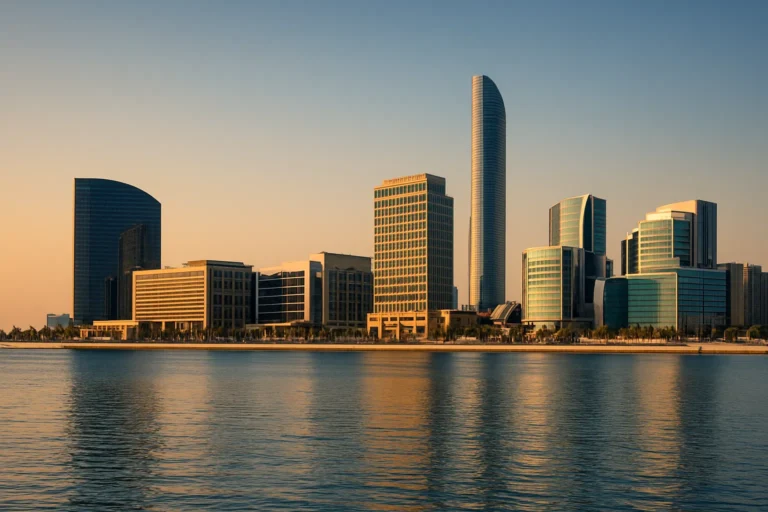
[Editorial image slot 1: Jafza facilities and proximity to Jebel Ali Port]
Jafza Licence Types Compared: FZE, FZCO, Branch and Freelance Permits
Choosing a legal structure is the decision that is hardest to undo later. Here is how the four common options compare.
| Structure | Shareholders | Best for | Watch-outs |
|---|---|---|---|
| FZE (Free Zone Establishment) | One | Solo founders, single-owner holding companies | Adding a shareholder later usually means restructuring or forming a new entity |
| FZCO (Free Zone Company) | Two or more | Co-founders, investors, joint ventures | Share split and capital must be agreed in the constitutional documents upfront |
| Branch | None — extends a parent company | Established UAE or overseas companies testing the market | The parent carries the liability, and the branch is usually limited to the parent’s activities |
| Freelance / sole practitioner permit | One individual | Consultants and professionals who need no office or warehouse footprint | No warehouse, narrower activity scope, no corporate shareholders |
An FZE is a limited liability company within the free zone with a single shareholder (jafza.ae). That single-owner clarity is why founder-led trading businesses gravitate towards it. An FZCO is the mirror image: two or more shareholders, and the right answer when you are bringing in a partner, an investor or a co-founder.
A branch is different in kind. It extends an existing foreign or UAE company’s activities into Jafza without creating a new legal person. Trading houses with an established parent entity often prefer this route because the corporate history, banking relationships and balance sheet stay intact.
Freelance or sole practitioner permits exist for individuals offering professional services who do not need physical premises. If you plan to hire staff or hold stock, they will not fit — choose a company structure instead.
Activity matching is where setups quietly go wrong. Your licence must name the correct activity. “General trading” and a defined commodity carry different requirements and often different fees, and some activities need third-party approvals before the licence can be issued. Getting this right at application stage saves amendments later.
Practical guidance: choose the structure that matches how you will bank, raise capital and add shareholders in three years — not simply the cheapest option today.
What Does 100% Foreign Ownership Mean in Jafza — And What Are the Limits?
When you own a company in the Jebel Ali Free Zone in Dubai, UAE, you hold the shares outright. Full foreign ownership and full repatriation of capital and profits are standard features of a free zone licence, and no local sponsor or UAE national shareholder is required. You own the entity, you keep the profits after tax, and you can move capital out through normal banking channels.
Two limits are worth understanding before you sign anything.
First, corporate tax is not automatic. Every free zone entity has to establish whether it qualifies for the qualifying free zone regime under UAE corporate tax rules. Qualification is not granted by the licence itself — it turns on the nature of your activities and the substance of your operations. Because the rules are detailed and continue to be clarified, treat this as a review item with the Federal Tax Authority’s published guidance and a licensed tax advisor, not a tick-box. We walk clients through the basics in our UAE Corporate Tax for Small Business: Your Simple Guide before they file anything.
Second, mainland access has boundaries. A free zone licence generally does not, on its own, allow you to trade directly in the mainland market without a distributor, a mainland branch, or the right customs and duty arrangements. Confirm your specific case with the authority or your advisor. If domestic UAE customers are central to your model, compare two options honestly: a Jafza entity paired with a mainland branch, or a mainland LLC. Our explainer on LLC Meaning in UAE: What an LLC Is and Why It Matters covers how the mainland route differs in ownership, licensing and cost.
Neither structure is “better”. The right answer depends on whether your revenue comes from cross-border flows, UAE domestic contracts, or both — and plenty of growing businesses eventually run both.
Jafza Facilities and Warehousing: Offices, Land Plots and Pre-Built Units
Jafza publishes pre-built warehouses for storage and light manufacturing with leasing rates starting as low as AED 400 per sqm (jafza.ae). Treat that as a modelling anchor, not a quotation. Rates and availability move with the market, and the unit type changes the number, so confirm current pricing directly before you build a budget around it.
The three facility routes behave very differently:
Pre-built warehouses and units. Fastest to occupy and easiest to budget for. You sign, fit out lightly, and start operating. The trade-off is less control over layout, and popular unit sizes can be scarce at short notice.
Land plots and build-to-suit. You take a plot or commission a building to your own specification. This suits operations with specific power, height or throughput requirements, and it can lower your cost per sqm over a long lease. The trade-offs are real: a longer lead time before you trade, higher capital outlay, and less flexibility if your volumes change direction. It is a commitment best made once you have a firm view of your three-year throughput.
Flexi-desks and plug-and-play offices. A low-friction start for a small team, with the option to upsize later. Showrooms are also available if you need to display goods to buyers.
Space is a licensing decision, not just an operational one. A larger leased facility typically supports a higher visa quota, so signing for less than you need can stall hiring within months. For context on what commercial space costs across the city, see our breakdown of Dubai Office Rent in 2026: What You’ll Pay and How to Save.
Compare the total cost, not the headline rent: rent per sqm, service charges, utilities and cooling, fit-out and racking, and deposit requirements.
If you are manufacturing, check four things before committing to a specific building: available power load, ceiling height, loading bay access, and whether your activity is permitted in that particular zone or unit. A warehouse that fits your goods may not fit your machinery.
[Editorial image slot 2: Jafza warehouse unit and visa quota planning]
How Many Visas Can You Get With a Jafza Licence?
Visa quota is the number most founders underestimate when they set up in the Jebel Ali Free Zone in Dubai, UAE. It is not set by the licence alone — Jafza links it to your licence type and, more significantly, the size of the premises you lease. A flexi-desk style package supports a small number of visas, while larger offices and warehouses unlock more. Confirm the exact quota attached to a specific unit with the authority before you sign the lease, because that number becomes your hiring ceiling.
| Visa type | Who it covers | What to plan for |
|---|---|---|
| Investor / partner | Owners and shareholders | Tied to your licence and shareholding |
| Employment | Staff you sponsor | One process per employee |
| Dependent | Spouse, children, and eligible parents | Additional documents and income thresholds |
Each employee visa follows the same sequence: entry permit, medical screening, Emirates ID biometrics, then residency stamping. Budget for the recurring costs as well as issuance — visa fees, medical testing, Emirates ID, health insurance and any deposits required. Our guide to Employment Visa Cost in UAE: What You’ll Pay in 2026 breaks those line items down, and UAE Free Zone Visa: Who Qualifies and How to Apply in 2026 explains eligibility in free zone terms.
If you plan to bring family, Parents Visa UAE 2026: How to Sponsor Your Mother & Father covers the sponsorship route. Short-term business visitors can usually be handled with a visit visa — see UAE Visit Visa News 2026: New Rules You Need to Know for the current position.
Practical tip: map your hiring timeline against your quota upfront. Under-leasing space, then discovering you cannot sponsor the operations manager you just hired, is one of the most common and most avoidable setbacks we see.
Step-by-Step: Setting Up in Jafza From Application to Licence Issuance
The sequence below is what a setup provider manages on your behalf. Knowing it makes the process predictable rather than opaque.
- Activity and structure decision. Define your business activities precisely, then select FZE, FZCO, branch or freelance permit based on ownership, banking and future capital plans.
- Name reservation and initial approval. Submit proposed trade names and shareholder documents. The authority issues approval in principle, which reserves your name and confirms the activity is acceptable.
- Facility selection. Choose your office, flexi-desk, warehouse or land plot. This step locks in your visa quota and a significant share of your cost base — which is why it should follow, not precede, your activity decision.
- Legal documentation. Application forms, shareholder passport copies, photographs, a business plan where required, and attested corporate documents for branch or corporate shareholders. Attestation is often the slowest step, so start it early.
- Licence issuance and registration. Pay the licence and registration fees, sign the lease or facility agreement, and receive your trade licence.
- Post-licence setup. Establish the establishment card — your entity’s immigration file, which is required before you can process any visa — then open a corporate bank account and begin visa applications.
- Ongoing compliance calendar. Licence renewal, lease renewal, visa renewals, customs code maintenance, and accounting and audit obligations. Diarise all of them at setup so they never turn into fines.
What a setup provider handles for you: activity classification, document attestation, application submission, facility shortlisting, and coordination through to licence issuance. That work is mostly about cutting back-and-forth with the authority — getting the classification right the first time, and knowing which document is holding up which step.
Jafza Costs Explained: What You Actually Pay For
There is no single “Jafza price”, and anyone quoting one should be asked for a breakdown. Your total is the sum of several lines, each of which you can scale up or down.
| Cost line | What it covers | How to confirm |
|---|---|---|
| Licence and registration fee | Your trade licence for the chosen activity and structure | Request a written quotation for your exact activity — “general trading” and defined commodities differ |
| Facility rent | Office, warehouse or plot, priced per sqm | Verify current rates and availability for the unit type you need |
| Security deposit | Held against the facility agreement | Ask about the amount and the refund conditions |
| Establishment card | Your entity’s immigration file, needed before any visa | Confirm the current fee and processing route |
| Visa costs, per person | Entry permit, medical, Emirates ID, residency stamping | See our employment visa cost guide |
| Activity-specific approvals | Third-party or regulatory sign-off for certain activities | Confirm at classification stage, before you apply |
| Fit-out and utilities | Racking, partitions, power, cooling, connectivity | Get your own quotes for anything beyond a shell unit |
Facility rent usually dominates the total. The AED 400 per sqm starting rate is a useful anchor for early modelling, but it must be verified for current availability and unit type before it becomes a budget line (jafza.ae).
Renewals are annual and recurring. Licence renewal, lease renewal and visa renewals all return every year. Build them into your year-one and year-two budgets, not just your setup fee. A setup that looks affordable once can look very different by the second renewal.
Bank account opening can add time. Some banks ask for a physical office rather than a flexi-desk, which influences your facility choice. Prepare your documentation in parallel with licence issuance rather than after it.
Ask for a line-item quotation before you commit. A single “package price” hides what you can and cannot scale later — and scaling is exactly what a growing trading business needs to do.
Jafza vs Other Dubai Free Zones: A Decision Framework
Deciding whether Jebel Ali Freezone Dubai UAE beats a cheaper inland free zone comes down to four comparisons, not one headline price.
| Axis | What to compare | Why it matters |
|---|---|---|
| Total annual cost | Licence, rent, service charges, renewals | Year-two cost, not setup cost, is the honest number |
| Facility fit | Power, ceiling height, loading bays, permitted activity | A unit that does not fit means a second move and a second fit-out |
| Visa quota per dirham | How many visas your premises support | A cheap unit with a low quota can cost you your next hire |
| Proximity | Distance to your port, airport, suppliers and customers | Shows up directly in haulage and turnaround time |
Choose Jafza if port and airport proximity, warehousing, or heavy logistics movement is central to your margin. The premium buys speed you can bill for.
Choose an alternative free zone if you are service-based, need only a small desk, want the lowest possible entry cost, or need an activity Jafza does not cover. Dubai and the wider UAE have free zones built around media, technology, healthcare and professional services — the right jurisdiction is the one that matches your activity, not the one with the best-known name. If you are weighing emirates as well as zones, our overview of Trade License Abu Dhabi: Costs, Types and How to Apply shows how the neighbouring capital structures licensing and cost.
Consider hybrid structures. A free zone entity for international trading plus a mainland presence for domestic contracts works well once your volumes justify running both.
Revisit the decision at renewal. As your volumes, headcount and customer mix change, so does the optimal zone and facility size. Nothing about this decision has to be permanent.
Common Mistakes to Avoid When Setting Up in Jafza
- Choosing the wrong legal structure. An FZE when you intended to bring in a shareholder, or a branch when a fresh FZCO would have been cleaner.
- **Leasing
Frequently Asked Questions About Jebel Ali Freezone Dubai Uae
How much does it cost to set up a company in Jebel Ali Free Zone?
The licence fee is only one part of the total. Jafza is facility-led, so rent usually dominates your cost base. Budget for rent per sqm, service charges, utilities and cooling, fit-out and racking, and deposits, alongside the licence and visa costs. Pre-built warehouses are published from as low as AED 400 per sqm, but treat that as a modelling anchor and confirm current pricing directly.
What is the difference between an FZE and an FZCO in Jafza?
An FZE is a limited liability company within the free zone with a single shareholder, which suits solo founders and single-owner holding companies. An FZCO has two or more shareholders and is the right fit for co-founders, investors or joint ventures, where the share split and capital must be agreed in the constitutional documents upfront.
How many visas can I get with a Jafza licence?
Visa quota is not set by the licence alone. Jafza links it to your licence type and, more significantly, the size of the premises you lease, so a larger office or warehouse unlocks more visas while a flexi-desk package supports only a small number. Confirm the exact quota attached to a specific unit with the authority before signing the lease.
Do I need a local sponsor to own a company in Jafza?
No. Full foreign ownership and full repatriation of capital and profits are standard features of a free zone licence, and no local sponsor or UAE national shareholder is required. You own the entity and keep the profits after tax, with capital moving out through normal banking channels.
Can a Jafza company trade directly in the UAE mainland?
Not automatically. A free zone licence generally does not, on its own, allow direct mainland trading without a distributor, a mainland branch, or the right customs and duty arrangements. If domestic UAE contracts are central to your model, compare a Jafza entity paired with a mainland branch against a mainland LLC.
Is Jafza or another Dubai free zone better for my business?
It depends on whether port and logistics movement sits at the centre of your margins. Jafza suits freight forwarders, general trading, import/export, light manufacturing, e-commerce fulfilment and regional distribution. Service-only businesses and freelance-style professionals gain nothing from a port next door and would pay a premium for facilities they never use, so a leaner inland free zone would serve them better.