
So, you're ready to set up shop in the UAE? Fantastic choice. Before you get swept up in the incredible lifestyle and work opportunities, there's one crucial first step: getting your finances sorted. And that all starts with a local bank account.
Navigating the banking system in a new country can feel a bit daunting, but I'm here to cut through the noise. This guide is your practical, no-fluff roadmap to opening a bank account in the UAE, whether you're a resident or just getting started.
The good news is that the country’s financial sector is not only secure but also incredibly welcoming to newcomers.
Why You Can Bank on the UAE's Financial Strength
It's a great time to be setting up your financial foundation here. The UAE's banking system isn't just stable; it's booming, which is a massive vote of confidence in the economy.
In fact, the Central Bank of the UAE recently reported that total bank assets have climbed to an impressive AED 3,873,060 million by mid-2025. What does that mean for you? It means a competitive, healthy market with tons of options, from the big traditional players to sleek new digital banks. Public trust is high, and the system is solid.
If you're interested in the nitty-gritty, you can dive into the latest numbers in the Central Bank's Statistical Bulletin.
This financial muscle translates into a better experience for expats. More choices, better services, and the security of knowing your money is in a well-regulated system.

To get you started, I've put together a quick checklist that breaks down the core requirements based on whether you have your residency yet.
Resident vs Non-Resident Quick Requirements Checklist
Getting your paperwork in order is half the battle. This table gives you a quick, at-a-glance look at the essential documents you'll need, depending on your residency status. Think of it as your cheat sheet to a smoother application process.
| Document/Requirement | UAE Resident | Non-Resident |
|---|---|---|
| Passport & Visa Copy | Required | Required |
| Emirates ID | Required | Not Required |
| Proof of Address (UAE) | Required (e.g., utility bill) | Not Required |
| Salary Certificate | Often Required | Not Applicable |
| Bank Reference Letter | Not Required | Often Required |
| Home Country Bank Statements | Not Required | Often Required (e.g., 6 months) |
As you can see, the requirements are pretty distinct. Residents have a much more straightforward path once they have their Emirates ID, while non-residents need to provide a bit more proof of their financial standing from their home country. Keep this list handy as you start gathering your documents.
Gathering the Essential Documents You Actually Need
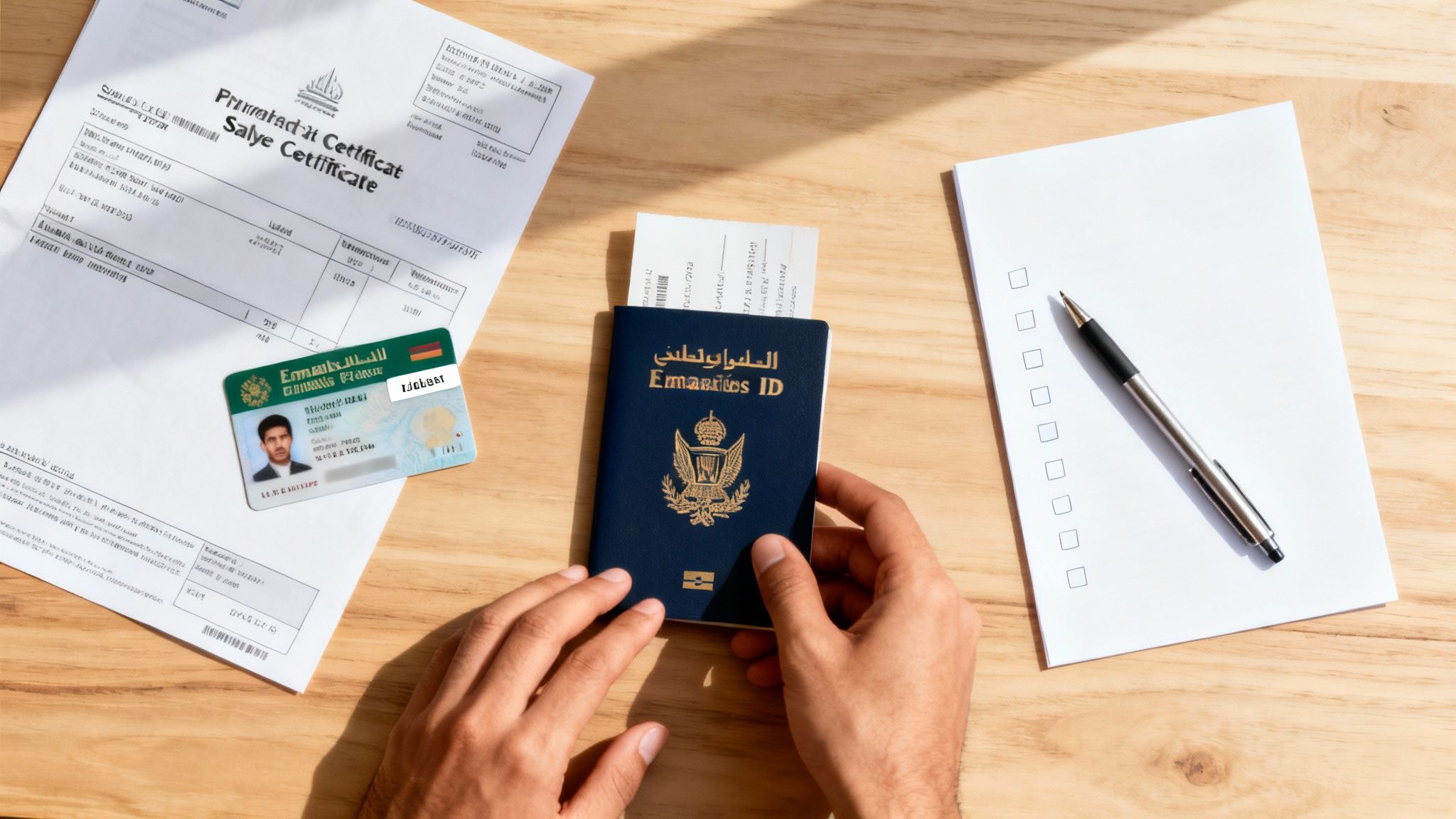
Let’s be honest, getting your paperwork together is usually the part everyone dreads when opening a bank account. But it doesn't have to be a nightmare. A little prep work can make this the smoothest step in the entire process.
The secret is knowing exactly what you need before you even think about starting an application. This will save you from the classic back-and-forth trips to the bank because of one missing piece of paper. We've all been there. So, let's break down what you absolutely must have versus what you might be asked for.
The Core Checklist for UAE Residents
If you already have your UAE residency visa, congratulations—the path is much simpler. Banks see you as a long-term resident, so the paperwork is mostly about confirming your identity and where you work.
Your Emirates ID is the golden ticket here. It's your official identification, and you won't get far without it. Seriously, it's non-negotiable for pretty much any banking service in the country. If you're still getting set up, our guide on https://alainbcenter.com/how-to-get-emirates-id/ can walk you through that process.
Beyond the ID, here's what you can expect to be asked for:
- Your original passport, plus a copy of the page with your UAE residence visa.
- A Salary Certificate or a No Objection Certificate (NOC) from your employer. This needs to be addressed to the specific bank and confirms your role and salary.
- Proof of your UAE address. A recent utility bill (like DEWA or SEWA) or your tenancy contract (Ejari) will do the trick.
Pro Tip: When you get that salary certificate, make sure it’s printed on official company letterhead, then stamped and signed. Banks are incredibly strict about this. A simple printout will almost certainly be rejected, sending you back to square one.
Documentation for Non-Residents
Trying to open an account without a UAE residence visa? The requirements are a bit different and, frankly, stricter. Because of compliance rules, banks need more reassurance about your identity and financial stability back home.
You'll absolutely need your original passport showing your UAE entry stamp. After that, you’ll have to provide more evidence of your financial standing.
- A reference letter from your bank in your home country. This should confirm you have an account in good standing.
- Bank statements from your home country, typically for the last three to six months.
- Proof of address from your home country, like a recent utility bill.
Some banks might even request a brief CV or a letter explaining why you need a UAE bank account. Your best bet is to call the bank's non-resident banking division ahead of time to get their most current list of requirements.
When it comes time to submit everything, especially for online applications, it's a good idea to combine multiple application documents into a single PDF. It’s a small step that makes your application look more professional and helps you avoid frustrating upload errors.
Choosing the Right Bank and Account for Your Lifestyle
Picking a bank in the UAE isn't just about finding a familiar name. It's about finding a financial partner that fits your life here. Ask yourself: are you a freelancer with an unpredictable income, a salaried professional sending money home every month, or a business owner managing daily cash flow? The answer will point you toward the right bank and account.
The UAE banking scene has it all. You've got the established giants like Emirates NBD and First Abu Dhabi Bank (FAB), which offer huge branch networks and that sense of security you get from face-to-face support. Then you have the nimble, digital-first players like Mashreq Neo, known for slick mobile apps and often lower fees.
Your choice should boil down to the practical, day-to-day stuff. How easy is their mobile app to use? What will it cost you to send money internationally? And a big one: what’s the minimum balance requirement? Letting your balance dip below this threshold, which is often around AED 3,000 to AED 5,000, can mean getting hit with monthly penalties.
Current vs. Savings Accounts: What You Need to Know
Next up is choosing the right type of account. They might sound similar, but they serve very different purposes, and using them correctly is the key to managing your money well in the UAE.
Think of a Current Account as your daily workhorse. It’s built for frequent use—your salary comes in, you pay your bills, and you cover daily spending. Crucially, it almost always comes with a cheque book, which is still a non-negotiable for big payments like your annual rent.
A Savings Account, on the other hand, is all about helping your money grow. These accounts typically offer interest (or profit, in Islamic banking) on your balance but might limit how many times you can withdraw cash for free each month. It's the perfect spot for your emergency fund or long-term goals, but not so great for your everyday expenses.
A smart strategy many expats use is to open both. Get your salary paid into a current account for all your regular spending and rent cheques. Then, set up an automatic monthly transfer to a savings account to build up your nest egg without even thinking about it.
Comparing Top UAE Banks for Expats
To make the decision of how to open a bank account in the UAE a bit easier, let's break down what some of the popular banks offer for different expat needs. The "best" bank is totally personal and comes down to your financial habits and priorities. If you don't have residency yet, your options will be a bit different, but you can learn all about that in our detailed guide to getting a non-resident bank account in Dubai.
Here’s a quick overview of key features, fees, and benefits of popular banks in the UAE to help you choose the best fit.
| Bank Name | Best For | Minimum Balance (AED) | Key Feature |
|---|---|---|---|
| Emirates NBD | Salaried Employees | AED 3,000+ | A massive ATM network and a wide variety of accounts designed for salary transfers. |
| Mashreq Neo | Tech-Savvy Expats | Varies (often none with salary) | A top-tier digital experience with a powerful mobile app and great lifestyle rewards. |
| HSBC Middle East | Global Professionals | Higher (e.g., Premier accounts) | Excellent international connectivity for seamless cross-border banking and wealth management. |
| First Abu Dhabi Bank (FAB) | All-Round Reliability | AED 3,000+ | As the UAE's largest bank, it’s known for great customer service and a full suite of products. |
This table gives you a starting point, but I always recommend visiting a branch or checking out their websites to see the latest offers and find the account that truly works for you.
Applying for Your Account: In-Person vs. Digital
You’ve got your documents sorted and a bank in mind—now for the final piece of the puzzle: submitting your application. In the UAE, you generally have two routes you can take. You can go the traditional route and visit a branch in person, or you can embrace the modern approach with a fully digital application.
Each path has its own feel and timeline. Your choice really boils down to what you value most. Do you prefer the reassurance of face-to-face guidance, or is the speed of a digital process more your style? Let’s walk through what to expect from both.
The In-Branch Experience
Walking into a bank branch is still a very popular choice, particularly if you have a few questions or if your situation isn’t completely straightforward. This method lets you sit down with a banking professional who can walk you through every form and check your documents right there on the spot. That immediate feedback is incredibly valuable and can stop small mistakes from holding up your application.
When you head to the branch, expect a pretty structured process. You'll likely grab a ticket, wait for your number to be called, and then a representative will handle everything from start to finish. This is your prime opportunity to ask about account fees, the features of their online banking app, and exactly when you'll get your hands on your new debit card.
To make your visit as smooth as possible, keep these tips in mind:
- Book an appointment: Many banks let you schedule a time online. This can save you from a long wait.
- Bring originals and copies: They'll usually make their own copies, but having a backup set is just smart planning.
- Ask about timelines: Get a clear idea of when to expect your debit card, cheque book (if applicable), and online banking details.
The Rise of Digital Applications
For anyone who values efficiency, opening an account online or through a mobile app is quickly becoming the new normal. Banks like Mashreq Neo have built their entire service around a digital-first model, often letting you open an account from your couch in less than an hour.
The process is usually pretty slick. You'll fill out an online form, upload scanned copies or photos of your documents, and then complete a virtual ID check. This might be a quick selfie or a short video call with a bank agent. If all your paperwork is in order, the experience is unbelievably fast.
If you want to ensure your documents are perfect before you even start, professional documents clearing services can help organize and verify everything for you.
The biggest win for digital banking is speed. While an in-person application can sometimes take a few days to get processed, many digital accounts are approved and active within 24 to 48 hours. That gets you financially up and running in the UAE much, much faster.
Once your application gets the green light—whether you did it in person or online—the last few steps are simple. You'll need to make an initial deposit, which varies depending on the bank and the account type. Soon after, a welcome kit with your debit card and PIN will be couriered directly to your registered address. The final step is activating your online banking profile, and just like that, you have full control over your new finances in the UAE.
Here’s a simple way to think about the two main account types you'll be deciding between.
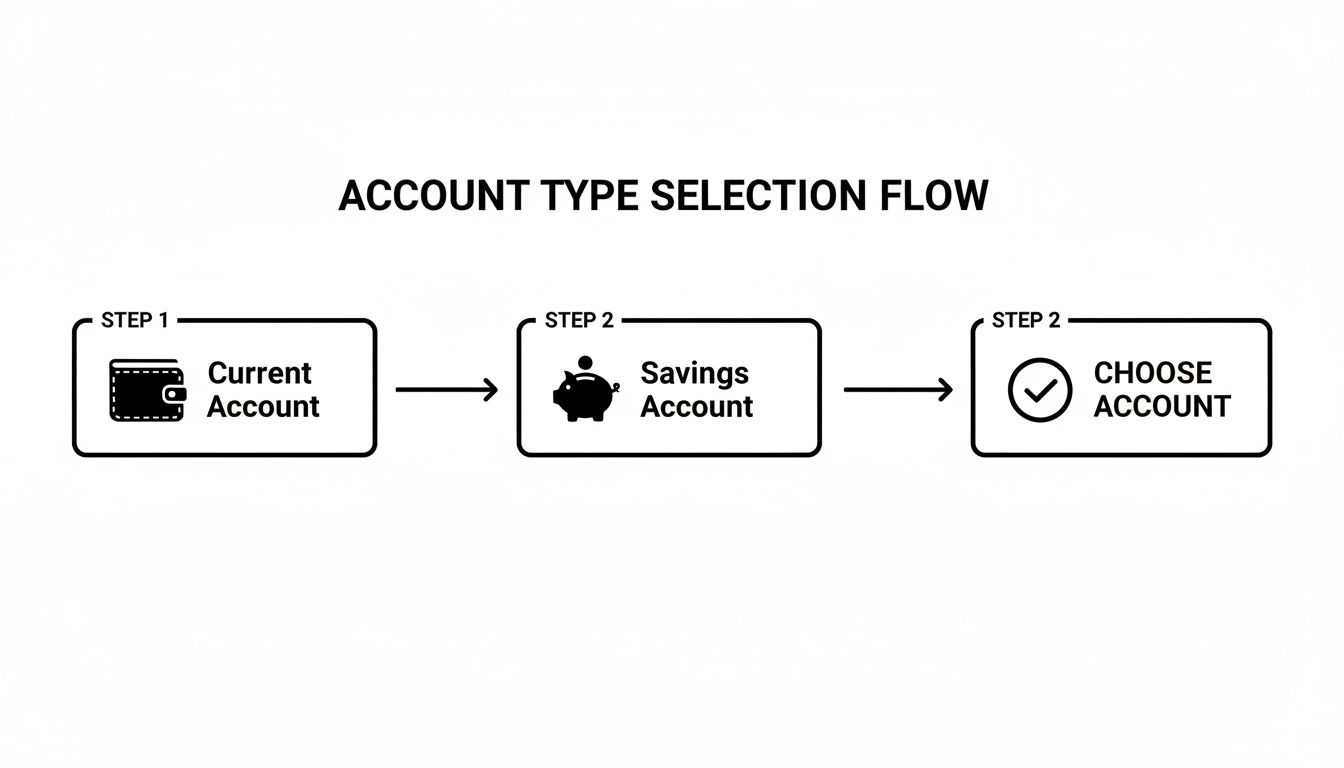
This visual boils down the core choice: a Current Account for all your day-to-day spending and a Savings Account to help you build toward your long-term goals.
Alright, you’ve successfully opened your UAE bank account. Nicely done. The next step is learning how to manage it so you can avoid those little fees that often catch newcomers off guard. A bit of know-how here really pays off, making your banking experience a whole lot smoother and cheaper.
First on your radar should be the minimum balance requirement. This is a standard feature for most current and savings accounts across the UAE. Essentially, banks expect you to keep an average monthly balance, usually somewhere between AED 3,000 and AED 5,000, to avoid getting hit with a penalty.
If your balance dips below that magic number, you’ll likely see a “fall-below fee” on your statement. This can range anywhere from AED 25 to over AED 100 a month. It might not sound like much, but it adds up fast, so it’s smart to keep an eye on your balance, especially as the end of the month approaches.
Common Account Fees to Watch Out For
Beyond the minimum balance, a few other charges are pretty standard. Knowing what they are ahead of time helps you plan your transactions and sidestep costs you don't need to pay. Think of it as learning the local rules of the road for your finances.
Here are some of the usual suspects you'll run into:
- International Transfers: Sending money back home is a regular part of expat life. The fees for these remittances can swing quite a bit depending on where you're sending it and how much.
- ATM Withdrawals: It's tempting to use any ATM you see, but using one from another bank’s network almost always comes with a small fee. While convenient, making a habit of it will start to show on your statement.
- Cheque Book Requests: Your first cheque book is typically on the house, but if you need another one, expect to pay a small fee.
- Account Closure: If you decide to close your account within the first year, some banks will charge an early closure fee, so keep that in mind.
How to Minimize or Avoid Bank Fees
The good news? Most of these fees are completely avoidable with a little forward-thinking. Banks tend to be pretty good to customers who make them their main financial hub. The single best move you can make is to have your salary transferred directly to the account.
A lot of banks in the UAE will completely waive the minimum balance requirement if a regular salary—say, AED 5,000 or more—is deposited into your account each month. It’s a simple, set-it-and-forget-it way to dodge the most common penalty.
Here are a few more practical tips to keep your banking costs down:
- Use Your Bank's ATMs: Make a point to use your own bank’s ATMs. Most banking apps have a handy locator to find the one closest to you, and it’ll save you from those pesky withdrawal fees.
- Bundle International Transfers: Instead of sending several small payments, try to consolidate them into one larger transfer. This usually helps cut down on the per-transaction fees.
- Go Digital for Statements: Opt for e-statements instead of waiting for paper copies in the mail. Some banks have started charging for printing and posting physical statements.
By being proactive and just knowing the lay of the land, you can make sure your bank account in the UAE is working for you, not the other way around.
Have Questions About Banking in the UAE? We've Got Answers
Once you’ve successfully opened your bank account in the UAE, you might run into a few more questions. The banking system here has its own way of doing things, and getting to grips with the specifics is the key to a stress-free financial life. Let's walk through some of the most common queries we hear from expats.
Can I Open an Account Before I Arrive?
This is a big one, but the short answer is almost always no. The UAE Central Bank has strict Know Your Customer (KYC) regulations, which means nearly every bank requires you to be physically present in the country to finalize an account. At a minimum, you'll need an entry stamp in your passport.
Some banks might let you kick off the application online from your home country, but you'll still have to come in person to sign the paperwork and complete the verification once you've landed. It’s a security measure that protects both you and the bank.
What Happens if I Lose My Job?
Losing your job is tough enough without worrying about your bank account. Here’s what happens: when your employer processes your final settlement, they notify the bank. This often triggers a temporary freeze on your account, especially if you have outstanding debts like a personal loan or credit card balance.
This is a standard practice across the UAE to ensure any outstanding liabilities are settled.
It's absolutely crucial to talk to your bank the moment your employment situation changes. Once your debts are cleared, the bank will lift the freeze. From there, you can either close the account or sometimes convert it to a non-resident savings account.
Is a Joint Account Possible for Spouses?
Yes, absolutely. Opening a joint account with your spouse is very common and a great way to manage shared household finances. The process is pretty much the same as opening a single account, but with one important catch: both of you must be there in person to sign the application forms.
You’ll both need to bring your individual documents:
- Passports with visa pages
- Emirates IDs
- Any other paperwork the bank requests
It makes budgeting for things like rent, utilities, and groceries so much easier when it's all coming from one place.
Do I Need a Minimum Salary to Open an Account?
For a standard current account—the kind that gives you a cheque book—many banks do have a minimum salary requirement. This figure usually sits somewhere between AED 3,000 and AED 5,000 a month, but it really depends on the bank.
But don't panic if your salary doesn't hit that mark. You can almost always open a basic savings account instead. While it won't come with a cheque book, it gives you everything you need to receive your salary, save money, and use a debit card for your day-to-day spending.
Navigating your finances in a new country can feel like a maze, but you don't have to figure it out on your own. Al Ain Business Center offers expert guidance to make your entire business and personal setup completely seamless, from getting your license to making the right banking introductions. Let us handle the details so you can focus on what matters most—your new venture. Learn more about our services at https://alainbcenter.com.
Related articles
 Banking
 Banking
 Banking
 Banking
Latest guides
- ID Card Status UAE: Check Emirates ID Online 2024
- 2-Year Residence Visa Renewal UAE Cost: 2026 Fee Breakdown
- Set Up a Company in UAE: Your Step-by-Step Roadmap
- Housemaid Visa Abu Dhabi: Cost, Steps and Requirements
- Green Visa UAE: Requirements, Costs and How to Apply
- UAE Visit Visa Categories for Technology & AI Talent