
That feeling of dread when you look at your visa’s expiry date? We’ve all been there. But dealing with an overstay fine in UAE is a lot less stressful when you know what to expect. Once your visa expires and the grace period is up, a standard fine of AED 50 per day kicks in for every day you’re in the country without a valid permit.
What Happens When Your UAE Visa Expires
When your UAE visa hits its expiry date, the clock starts ticking. It’s not just about a piece of paper becoming invalid; it’s a change in your legal standing here in the UAE. The government has very clear immigration rules, and the overstay fine is simply the mechanism they use to ensure everyone stays compliant.
Think of your visa like a hotel keycard—it has a clear checkout date. If you stay past that date without extending your stay or checking out, there's a penalty. The system is designed to be straightforward, encouraging everyone to keep their visa status up-to-date.
The Initial Phase After Expiry
Right after your visa expires, you usually get a grace period. This is your golden window of opportunity. It's a short, penalty-free time the authorities give you to either sort out your travel plans to leave the country or get your visa renewal underway.
But here’s the crucial part: not all grace periods are created equal. The length can vary wildly depending on your visa type.
- Residence Visas typically come with a more generous grace period. You might get up to six months, which gives residents a fair amount of time to get their affairs in order.
- Tourist and Visit Visas are a different story. They have much shorter grace periods—sometimes, there's no grace period at all. Fines can start piling up from the very next day.
It's absolutely essential to know which category your visa falls into. Assuming you have a long grace period when you don't is a surefire way to rack up a hefty overstay fine in UAE.
To give you a clearer picture, here’s a quick summary of the standard fines and grace periods.
Quick Overview of UAE Overstay Fines
| Visa Status | Standard Daily Fine | Grace Period |
|---|---|---|
| Residence Visa | AED 50 per day | Often 30-180 days (varies) |
| Tourist/Visit Visa | AED 50 per day | Typically 10 days (can be less) |
| Cancelled Visa | AED 50 per day | 30 days (standard) |
Disclaimer: Grace periods can change based on the latest government regulations. Always verify your specific situation with the official authorities.
This table highlights just how different the rules are for each visa type. Always double-check what applies to you.
An overstay is more than just a financial penalty; it's a legal issue that can impact your ability to travel or apply for future visas in the UAE. Addressing it promptly is the best course of action to avoid more serious complications down the line.
Getting the timing right for renewal is everything. To make sure you're well ahead of any deadlines, it’s worth taking a look at the complete UAE visa renewal process to understand all the steps involved. Being proactive is, without a doubt, the best way to avoid fines altogether.
How Your UAE Overstay Fine Is Calculated
Getting a handle on how the UAE calculates overstay fines is the first step toward sorting out your situation. It's not a simple, one-size-fits-all penalty; the final amount really depends on your visa type and exactly how long you've overstayed. Knowing which set of rules applies to you is critical.
For tourists and visitors, things are pretty straightforward. Once your visa and any grace period run out, a standard daily fine kicks in. But for residence visa holders, it's a bit more complicated, with a tiered structure designed to encourage you to sort things out quickly.
The Fine Structure for Different Visas
To make things simpler, the UAE government has mostly standardised the daily penalty. For most visas, like tourist and visit visas, you'll be looking at a fine of AED 50 per day once your grace period is over. It's a consistent rate, which makes it easy to work out what you owe.
For residents, though, the financial hit gets bigger over time. It’s a clear message about how seriously the authorities view a prolonged overstay. You get a 30-day grace period after your residence visa expires, but once that's up, the fines start racking up, and they grow progressively.
This timeline gives you a visual on the key moments, from the day your visa expires, through the grace period, and to the point where daily fines begin.
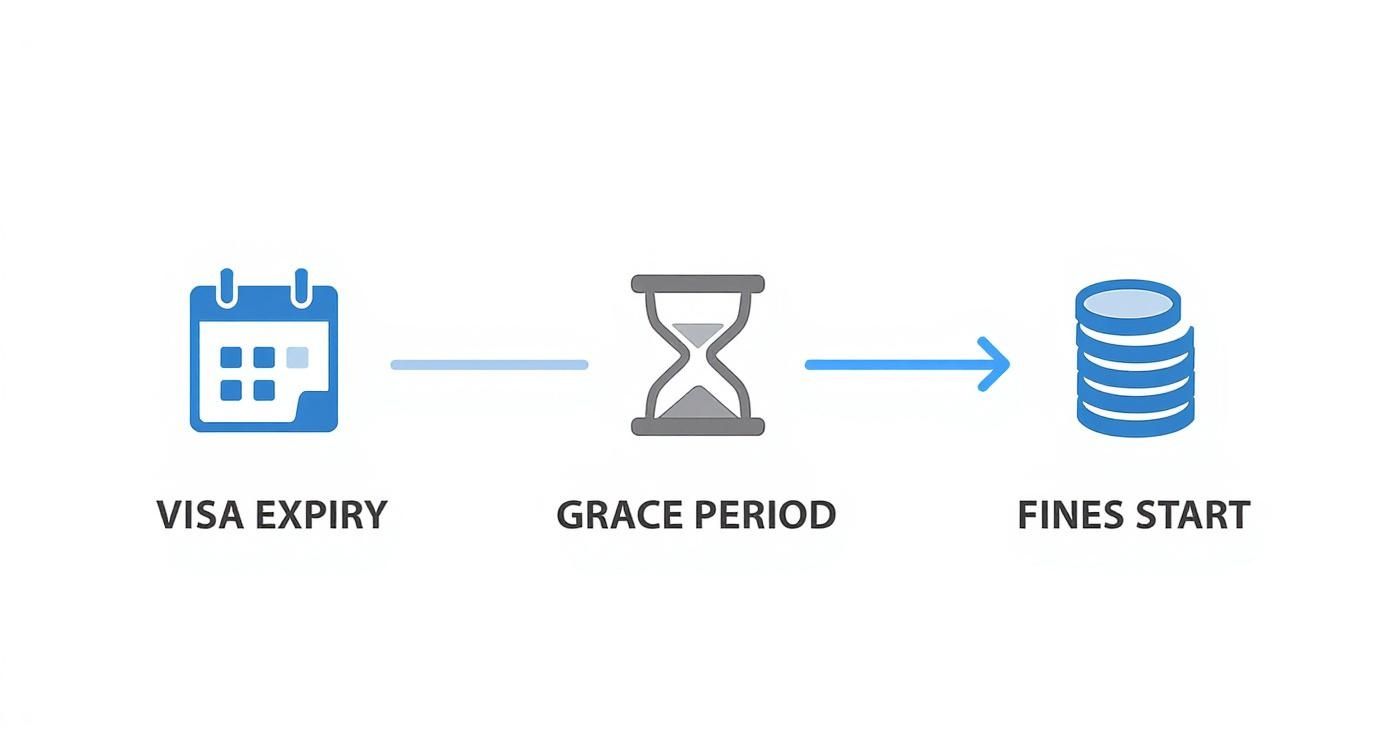
As you can see, that grace period is a vital buffer. But the moment it ends, those financial penalties become a daily reality.
A Breakdown of Resident Overstay Fines
If you're a resident, the fine doesn't just start at a flat daily rate. It actually increases at certain milestones, which means a longer overstay can become incredibly expensive.
Here’s how the fine progression works:
- Day 1 of Overstay: The initial penalty is AED 125.
- Subsequent Days: After the first day, the rate drops to AED 25 per day.
- After Six Months: At the six-month mark, the daily rate jumps to AED 50.
- After One Year: If the overstay continues for a full year, the fine escalates again to AED 100 per day.
This tiered system sends a clear message: the government wants to discourage people from living in the UAE without a valid visa for long periods. You can always get more details on these fine structures and check your own status. To get the full picture, it's worth reading comprehensive research about Dubai overstay fines.
The escalating fines for residents are a serious warning. The longer you put off fixing your visa status, the deeper the financial hole gets. It’s best to be proactive.
Luckily, checking how much you owe is a simple process using official channels. The ICP website has a dedicated portal just for this purpose, letting you see the exact amount and plan your payment without any guesswork. By understanding these calculation rules, you can figure out your liability and take the right steps to clear your name.
Understanding Grace Periods and Exemptions
The grace period is your safety net after a visa expires, but it's a concept that trips up a lot of people. Think of it as a short, penalty-free window the UAE government gives you to get your affairs in order. It's a critical idea to get your head around, because a simple misunderstanding here can quickly lead to an accumulating overstay fine in UAE.
The length of this buffer depends entirely on your visa type. For those with a residence visa, the grace period is usually quite generous, often stretching up to six months after the visa is cancelled or expires. This gives residents a solid amount of time to either sort out a renewal or plan their departure without immediate financial stress.
For visitors, however, it's a completely different story.
Navigating Different Grace Period Windows
Tourist and visit visas run on a much tighter clock. In fact, many don't have much of a grace period at all, if any. It's a common and costly mistake to assume the generous window for residents applies to everyone, which can lead to unexpected fines kicking in from the very first day you've overstayed.
To make things a bit more flexible, the UAE recently brought in some important updates. One of the biggest changes is a new 10-day grace period for many visa overstayers. This gives people a short window to fix their status—by renewing, changing their visa, or leaving the country—without a penalty. It’s a welcome shift from the older rules where fines often started stacking up immediately. You can find more details about these updated visa regulations on xpath.global.
Here’s a simple way to think about it:
- Residence Visas: You get a longer grace period, often between 30 to 180 days, which is plenty of time to handle renewals or exit plans.
- Tourist/Visit Visas: Expect a much shorter window, frequently just 10 days, demanding quick action as soon as the visa expires.
- Cancelled Employment Visas: After cancellation, you'll typically have a 30-day grace period to either find a new job or leave the country.
The golden rule? Always double-check the specific grace period tied to your visa category. Assumptions can be expensive.
While the system has strict rules, it isn’t heartless. The UAE's approach to immigration often shows a real understanding of global events, offering relief when circumstances are genuinely beyond an individual's control.
Humanitarian Exemptions and Special Cases
Beyond the standard grace periods, UAE immigration policy also has room for humanitarian exemptions. These aren't your everyday waivers; they're applied in truly extraordinary situations and show a compassionate side to the law.
For example, the government has, in the past, waived overstay fines for nationals from countries hit by severe crises, like conflict or natural disasters, that make it unsafe or impossible to return home. These decisions are made at the highest levels and reflect the UAE's role as a responsible global partner.
These exemptions are always handled on a case-by-case basis and announced through official government channels. It’s a reminder that while sticking to the rules is essential, the system has a way of accounting for severe, unforeseen hardships that stop people from meeting their visa deadlines. This balanced approach ensures the law is enforced fairly while still acknowledging genuine difficulty.
How to Pay Your Overstay Fine
Okay, so you've found out you have an overstay fine. The next logical question is, how do you actually pay it? Thankfully, the UAE government has made the process pretty straightforward, giving you a few different ways to clear what you owe without any major headaches. Whether you're comfortable handling things online or prefer to deal with someone face-to-face, there’s an option that will work for you.
The quickest and most common way to get this sorted is by paying online. It lets you clear your overstay fine in UAE from just about anywhere, which is incredibly convenient. But if you're not a fan of online payments, you can pop into an authorised service centre for help or even settle the fine directly at the airport as you're leaving the country.
Step-by-Step Payment Options
Before you start, make sure you have your passport details and your visa file number handy. Having these ready will make the whole process go a lot smoother.
Here’s a breakdown of the main ways to pay:
- Online via the ICP Website or App: The Federal Authority for Identity, Citizenship, Customs and Port Security (ICP) has a user-friendly portal. You just need to find the "Fines Payment" service, punch in your details, see the amount you owe, and pay with a credit or debit card. It's that simple.
- At Authorised Typing Centres: If you'd rather have someone guide you through it, visiting an approved typing centre or an Amer centre is your best bet. The staff there are pros at this—they’ll check your fine amount and process the payment for you.
- Directly at the Airport: Leaving the UAE for good? You can often pay your fines at the immigration counters right before you fly out. It’s a handy, all-in-one option to clear your dues before departure.
Key Takeaway: Honestly, the easiest and most recommended method is using the official ICP website or its mobile app, UAEICP. It’s secure, fast, and saves you the stress of trying to sort things out at the airport at the last minute.
Troubleshooting Common Payment Issues
Every now and then, technology throws a curveball. You might hit a payment gateway error, or the fine amount displayed doesn't seem to match your own calculations. If that happens, don't panic.
First, just double-check all the information you've entered—things like your file number and passport details. A tiny typo can cause a surprising amount of trouble.
If the problem won't go away, your next move should be to contact the ICP support centre or visit an Amer office. They can look into any discrepancies and sort out technical glitches. It also helps to have a good grasp of the different fees involved. You can get a better sense of the total costs by looking into the visa renewal fee in the UAE. This will give you a clearer picture of all the potential charges that might be part of your total bill.
Consequences of an Unpaid Overstay Fine
Ignoring an overstay fine in the UAE might feel like a simple financial hiccup, but trust me, it can quickly snowball into a much more serious legal headache. The fallout goes way beyond just the money you owe. It can seriously impact your ability to travel and work in this part of the world for years.
Some people think they can just leave the country without paying up. That's a huge gamble. The UAE's immigration systems are all connected. An unpaid fine is a massive red flag that will almost certainly pop up at passport control when you try to leave, forcing you to settle the bill right then and there before you can board your flight.
The Risk of Travel Bans and Blacklisting
The most immediate and severe consequence is the very real threat of a travel ban. We're not talking about a temporary slap on the wrist. This can be an official ban stopping you from re-entering the UAE for a long time—sometimes several years, or even permanently.
This ban gets logged into a central immigration database. If you’re blacklisted and try to apply for any new visa, it’s going to be an automatic rejection.
A common mistake is thinking a UAE ban only affects travel here. The reality is, due to data-sharing agreements among the Gulf Cooperation Council (GCC) nations, being blacklisted in the UAE could throw a wrench in your visa applications for neighbouring countries too.
That single unpaid fine could potentially shut the door on opportunities across the entire Gulf region. The length and severity of the ban usually depend on how long you overstayed and the total fine you've racked up.
Let's break down how things can escalate. The longer you let an overstay situation continue, the more serious the consequences become, moving from simple fines to much bigger legal problems.
Consequences of Overstaying in the UAE
| Duration of Overstay | Potential Consequence | Severity |
|---|---|---|
| A few days to weeks | Daily financial penalties | Low |
| Several weeks to months | Accumulating fines, potential for an administrative travel ban | Medium |
| Many months to years | Substantial fines, high likelihood of a multi-year or permanent travel ban, blacklisting, potential legal action | High |
| Ignoring a departure order | Immediate blacklisting and potential for detention and deportation, in addition to fines | Very High |
As you can see, what starts as a manageable issue can quickly become a major obstacle to your future in the region.
Potential for Legal Action
If your overstay is lengthy and the fines grow into a substantial amount, the authorities might decide to take legal action. This is where things get really serious, moving beyond an administrative penalty to a formal legal case.
This can trigger a cascade of problems that are incredibly difficult to sort out:
- Legal Cases: Your name could be entered into the legal system, creating a permanent record that follows you.
- Difficulty with Future Visas: Even if you eventually pay the fine and serve out a ban, having a past legal case on your record can make future visa applications a nightmare.
- Financial Liability: The government can pursue the outstanding amount through legal channels, which can complicate your financial life significantly.
At the end of the day, dealing with an overstay issue head-on and as quickly as possible is the only real way to protect your future travel and residency options in the UAE. The long-term damage from an unpaid fine far outweighs the immediate cost of getting it sorted.
Avoiding and Managing Overstay Fines

Let's be honest, the best way to deal with an overstay fine in the UAE is to never get one in the first place. Staying on top of your visa status is always going to be less stressful and cheaper than trying to sort things out after it has expired.
It really comes down to simple habits. Mark your visa expiry date on your calendar—your physical one and your phone. Set a few reminders weeks ahead of time. This gives you a comfortable buffer to get your documents together and kick off any renewal process without that last-minute panic.
Proactive Steps for Visa Compliance
Think of your visa expiry date like a critical work deadline. Being organised is your best line of defence against fines.
Here are a few practical tips to keep you on the right side of the law:
- Renew Early: Don't wait for the grace period. Start your visa renewal process at least 30 days before it's due to expire.
- Know Your Grace Period: Get crystal clear on the specific grace period for your visa type. A tourist visa's grace period is a world away from a resident visa's.
- Check Your Status Regularly: Make it a habit to check your visa status online through the official ICP portal. It’s a quick check that can save you from big surprises down the line.
For certain nationalities, having access to tailored information can be a huge help. For example, there's a specific Dubai visa guide for Philippine citizens that details requirements just for them.
Managing an Existing Overstay Situation
If you've found yourself in an overstay situation, the key is to act fast. Don't bury your head in the sand—those fines add up every single day. The first thing you should do is talk to your sponsor; they can often offer guidance or help you navigate the next steps.
Your first official stop should be an Amer or Tasheel centre. These are government-approved service centres set up to give you the correct information on your fine and walk you through the process of getting your status regularised.
In rare cases, humanitarian waivers are granted. The UAE has shown compassion in times of crisis, such as granting exemptions to Iranian nationals who were stranded due to regional conflicts that made travel impossible.
For anything more complicated, getting professional help from documents clearing services can be a lifesaver. They know the system inside and out, ensuring all your paperwork is filed correctly and efficiently.
Got Questions? We’ve Got Answers
When you're dealing with visa rules and potential fines, it’s natural for a lot of specific questions to pop up. Let's clear up some of the most common queries about the overstay fine in the UAE to help put your mind at ease.
How Much Is the Daily Overstay Fine?
For most visa types, the UAE has a straightforward penalty. Once your grace period is over, you can expect a fine of AED 50 for each day you remain in the country.
This flat rate generally applies whether you were on a tourist visa, a visit visa, or even a cancelled residence visa. Keep in mind, though, that fines for an expired residence visa (that hasn't been cancelled) can sometimes follow a different, escalating structure.
Is It Possible to Get Overstay Fines Waived?
Yes, it's possible, but only in truly exceptional situations. The UAE government might consider waiving an overstay fine if something happened that was genuinely out of your hands.
You can submit an application for a waiver, but you'll need to back it up with solid proof. This isn't for minor inconveniences; we're talking about things like:
- Serious Medical Reports: Proof that a severe illness or hospitalisation made it impossible for you to travel.
- Legal Documents: Evidence that your passport was held by an official authority for a legal reason.
- Official Correspondence: Things like letters showing a last-minute visa rejection for another country that created an unavoidable delay.
Think of a waiver as a compassionate measure, not a loophole. It's reserved for genuinely unforeseen and serious circumstances. It's always best to assume you'll have to pay the fine unless you get an official approval for the waiver.
How Can I Check if I Have an Overstay Fine?
Finding out your status is pretty simple and you can do it right from your phone or computer. The easiest method is to use the official Federal Authority for Identity, Citizenship, Customs and Port Security (ICP) website or its mobile app, UAEICP. You’ll just need your visa file number and passport details.
If you’re a Dubai resident, you can also check through the General Directorate of Residency and Foreigners Affairs (GDRFA) website. For in-person help, popping into an authorised Amer centre is another great option.
Can I Come Back to the UAE After Paying an Overstay Fine?
In most cases, absolutely. Paying your overstay fine in full is the most important step to ensure you can return to the UAE without any trouble. Once the slate is clean, you can typically apply for a new visa as usual.
However, a word of caution: a very long overstay or ignoring the fine altogether could lead to much more serious consequences, like a travel ban or being blacklisted. This would prevent you from re-entering the country. The key is to settle any dues promptly to avoid these headaches.
Trying to make sense of the UAE's visa regulations can feel overwhelming, but you don't have to figure it all out on your own. Al Ain Business Center provides expert PRO services and visa assistance to keep you compliant and help you avoid expensive fines. Let our seasoned team manage the complexities so you can concentrate on what really matters. Visit us at https://alainbcenter.com to secure your peace of mind.
Related articles
 Business Setup
 Business Setup
 Business Setup
 Business Setup
 Business Setup
 Business Setup
Latest guides
- 2-Year Residence Visa Renewal UAE Cost: 2026 Fee Breakdown
- Housemaid Visa Abu Dhabi: Cost, Steps and Requirements
- Green Visa UAE: Requirements, Costs and How to Apply
- UAE Visit Visa Categories for Technology & AI Talent
- Business Visa in UAE 2026: Types, Costs and How to Apply
- Visa-Free Countries for UAE Residents With Pakistani Passports